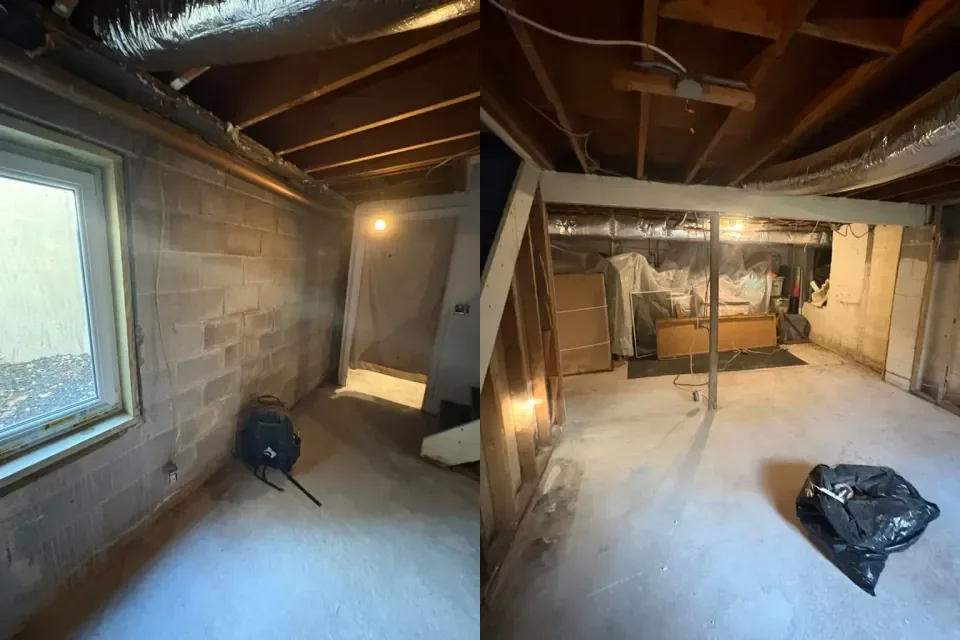
Before You Drywall a Basement: An Insulation Handoff Checklist
Use this basement pre-drywall checklist to verify insulation, record rough-ins and access points, and give the finishing crew a clear handoff.


Use this basement pre-drywall checklist to verify insulation, record rough-ins and access points, and give the finishing crew a clear handoff.
Few things are more frustrating — or expensive — than discovering spray foam that won't stick. You've prepped the job, set up the rig, sprayed the cavity, and everything looked good at installation. Then, days or weeks later, you get the call: the foam is peeling off the substrate, sagging in the cavity, or pulling [...]
If you're considering moving from disposable spray foam kits to a professional 55-gallon drum system — or you're starting a spray foam insulation business from scratch — you need to understand the equipment investment and operational requirements before you place your first material order. Running drum-fed spray polyurethane foam (SPF) isn't just about buying a [...]
When most contractors think "spray foam," they picture wall cavities and attic insulation. But spray polyurethane foam is also a proven commercial roofing system — not just an add-on insulation layer, but a fully integrated roof membrane and insulation assembly. SPF roofing has been protecting flat and low-slope roofs for over 40 years, and when [...]
Ask any spray foam installer what tripped them up on their first inspection, and half will say "the thermal barrier requirement." It's the most misunderstood — and most frequently violated — code provision for spray polyurethane foam insulation. The confusion stems from two distinct fire-safety standards in the International Building Code (IBC) and International Residential [...]
If you've ever walked a job where the inspector red-tagged spray foam for insufficient R-value, you know: guessing at code compliance doesn't fly. The International Residential Code (IRC) and International Energy Conservation Code (IECC) set prescriptive R-value minimums by climate zone — and spray polyurethane foam (SPF) installers need to hit those targets without over-spraying [...]
Cathedral ceilings—sloped ceilings that follow the roofline with no attic space—create unique insulation challenges: limited cavity depth, condensation risk from warm interior air contacting cold roof deck, and building code requirements that mandate either ventilation or specific unvented assembly strategies. Closed cell spray polyurethane foam has become the dominant solution for cathedral ceiling insulation because [...]
Spray foam insulation solves the unique challenges of metal buildings—condensation control, irregular substrate surfaces, and severe thermal bridging—better than any alternative insulation system. Whether you're insulating a pre-engineered metal building (PEMB), agricultural pole barn, or corrugated Quonset hut, spray polyurethane foam delivers superior air sealing, thermal performance, and moisture management. This guide covers why spray [...]
Crawlspace encapsulation is one of the highest-margin, most repeatable services for insulation contractors—but only if you systematize the workflow to run 5-10 jobs per week without sacrificing quality or code compliance. This production-focused guide covers the technical decisions (open vs. closed cell, conditioning vs. venting), equipment setup for tight access, vapor barrier integration, and IRC [...]
Spray foam insulation is the preferred thermal and moisture control system for cold storage facilities, refrigerated warehouses, walk-in coolers, and freezer rooms because it delivers superior R-value per inch, eliminates air infiltration, and controls vapor drive in extreme temperature differentials that would destroy conventional insulation systems. This guide covers the technical requirements for specifying and [...]