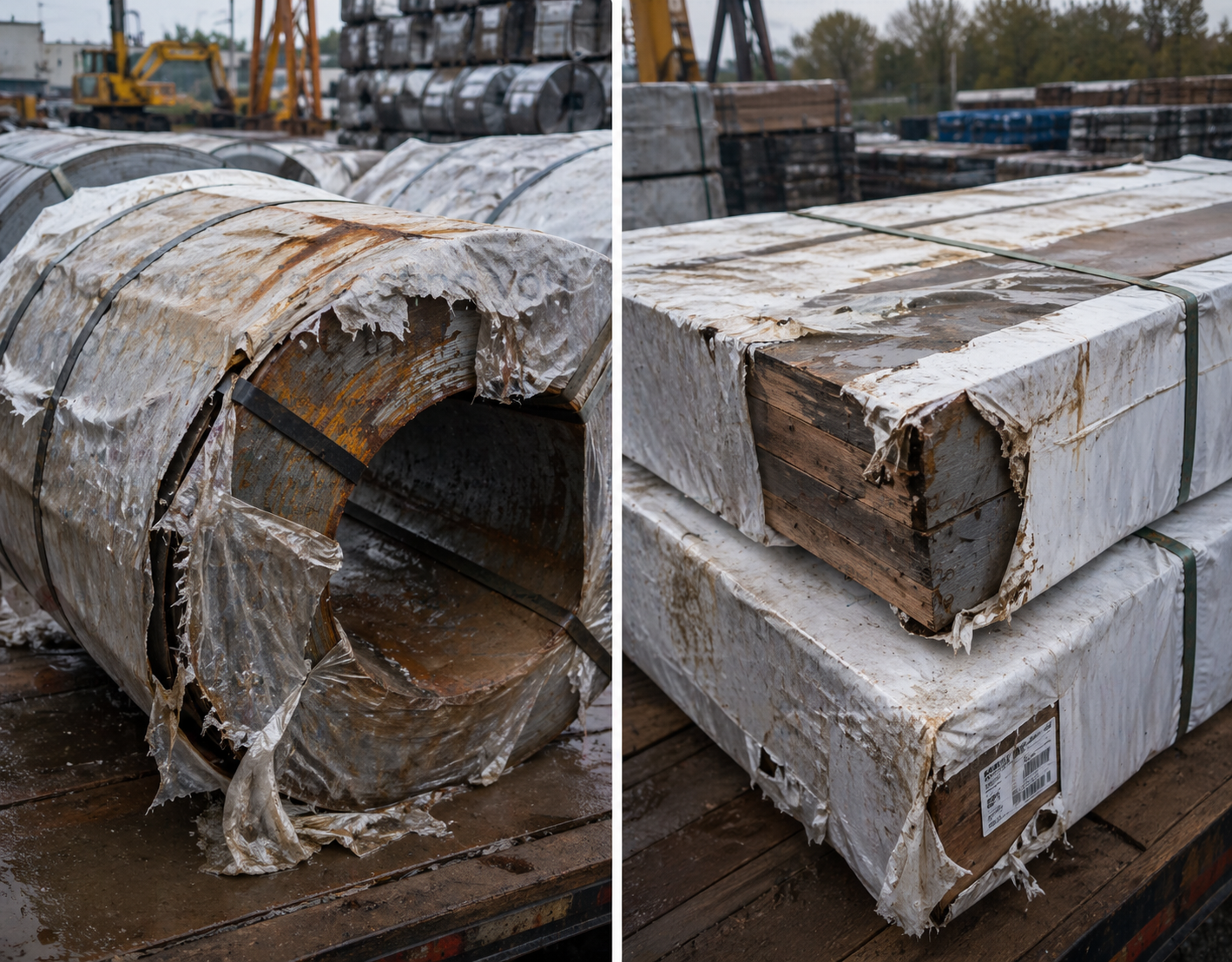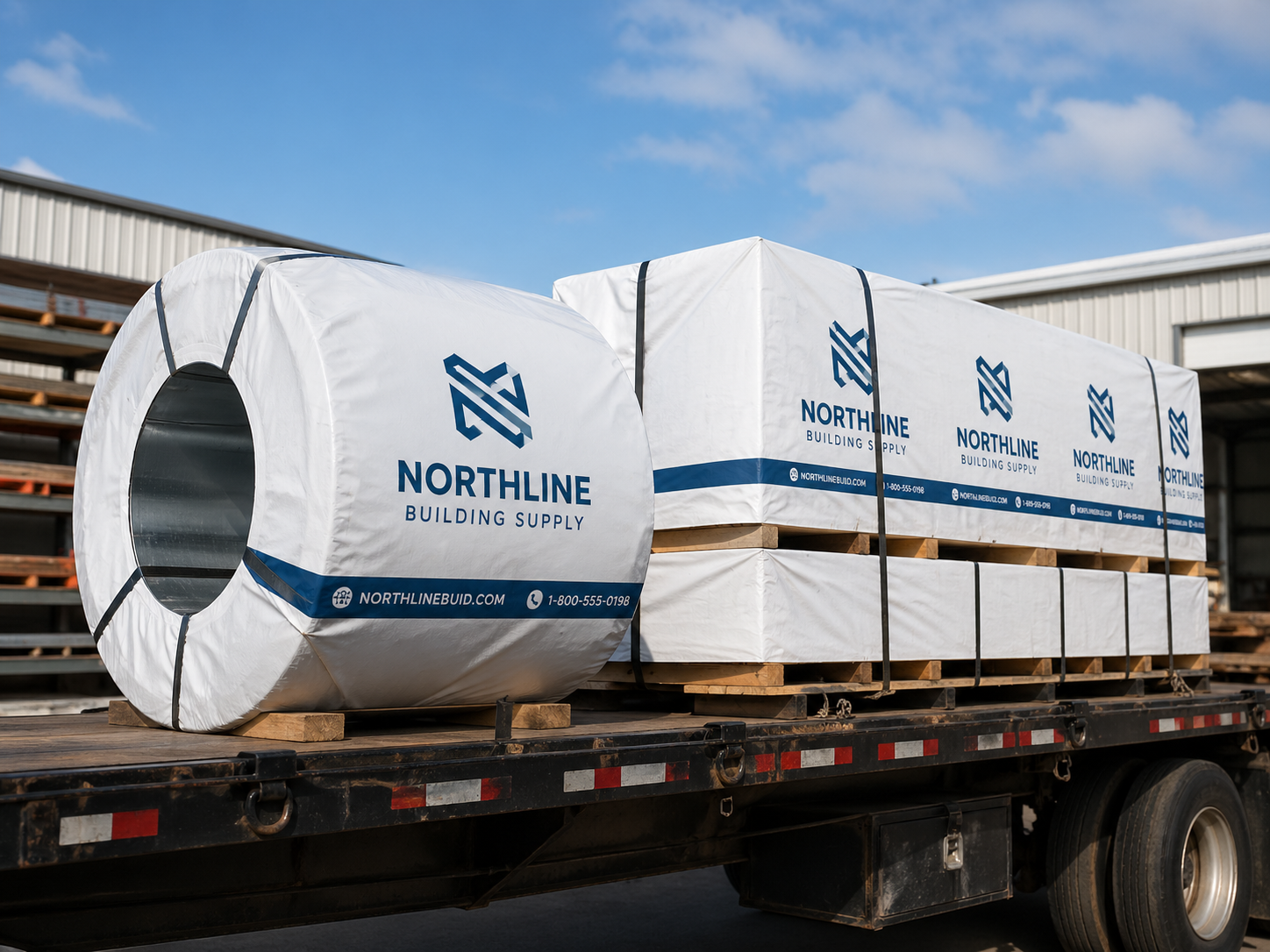
Weather Wrap vs. VCI Packaging: What Steel Shippers Need to Know
Compare weather wrap and VCI for steel shipments with route scenarios, a packaging-system diagram, and a checklist for purchasing and validating protection.


Compare weather wrap and VCI for steel shipments with route scenarios, a packaging-system diagram, and a checklist for purchasing and validating protection.
Troubleshoot wet wrapped lumber with a moisture-pathway table, dew-point example, receiving checklist, and practical questions for selecting protective packaging.
Measure finished lumber bundles, choose a wrapping pattern, and calculate roll yield with worked examples, a dimension diagram, and a copyable order worksheet.
Best House Wrap for Humid Climates: Vapor Drive & Perm Rating Guide Best House Wrap for Humid Climates: Moisture Management Guide Selecting the right weather-resistant barrier for humid climates isn't about finding the highest perm rating on the shelf. It's about understanding vapor drive direction, seasonal moisture dynamics, and how your wall assembly handles water [...]
House Wrap Cost Per Square Foot: Pricing Guide for Contractors When you're bidding a project or planning a build, accurate cost estimates separate profitable jobs from money-losers. House wrap seems like a straightforward line item—until you realize the price range spans from $0.05 per square foot to $0.25+ per square foot, with labor costs varying [...]
Felt Paper vs House Wrap: Should You Still Use Building Paper? Walk onto any construction site built before 1990, and you'll find asphalt-saturated felt paper (Grade D building paper) stapled to the sheathing. For decades, it was the industry standard—the only weather-resistant barrier most builders knew. Then synthetic house wraps arrived in the 1980s, and [...]
House Wrap vs ZIP System: Which Is Better for Your Build? The debate between traditional house wrap and ZIP System sheathing has become one of the most discussed topics on job sites over the past decade. Both systems meet code, both can perform well when installed correctly, but they represent fundamentally different approaches to the [...]
House Wrap Around Windows and Doors: Flashing Integration Guide Window and door penetrations are the Achilles' heel of any building envelope. Get the flashing integration wrong, and you're looking at moisture intrusion, rot, and callbacks that'll cost far more than doing it right the first time. After decades in the field, I can tell you [...]
One of the most common misconceptions in building envelope design is that "house wrap" and "air barrier" are interchangeable terms. They're not. A water-resistive barrier (WRB) is designed to stop liquid water from penetrating the wall assembly. An air barrier is designed to stop air leakage through the envelope. While some products serve both functions, [...]
Fiber cement siding (HardiePlank, Allura, James Hardie, etc.) has become the go-to cladding for durability, fire resistance, and low maintenance. But fiber cement is a reservoir cladding — it absorbs water during rain and releases it slowly over days. This creates unique WRB requirements that differ from vinyl, metal, or wood siding. Install the wrong [...]