

Weather wrap limits exposure to the outside environment; volatile corrosion inhibitor (VCI) packaging adds a specified corrosion-inhibiting function inside a suitable enclosure. Some products combine both functions, but ordinary weather-resistant wrap should not be assumed to contain VCI. For steel shippers, the right choice starts with the shipment’s corrosion risk, storage conditions, and customer requirements.
The decision in brief
- Specify external weather protection and internal corrosion protection separately.
- Confirm the exact metal, coating, surface condition, and exposure period.
- Use the VCI supplier’s enclosure and application instructions.
- Do not treat either option as a remedy for wet, dirty, or already corroded steel.
By Andrew Sutherland, founder of R-Value Associates, with over 20 years in building materials sales and distribution. Updated October 6, 2026.
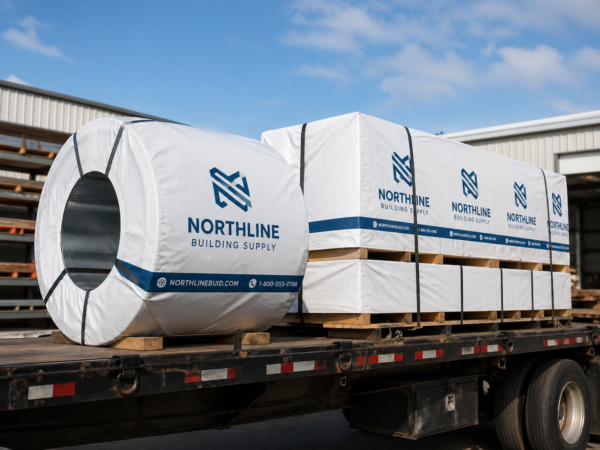
What weather wrap does for a steel shipment
Weather wrap provides an outer covering intended to reduce exposure to rain, snow, dirt, sunlight, and handling damage according to its specification. Material strength, exposure limits, fit, and closure details all matter.
A sound outer covering can still enclose moisture or contaminated steel. Keeping rain off the outside does not establish that the atmosphere around the metal is suitable for corrosion-sensitive storage. Nor does the word waterproof establish the performance of seams, openings, or the entire finished package.
Ask for data for the exact wrapper and application. Describe whether the load is steel sheet, a coil, structural members, or finished parts. Sharp edges, open cavities, and the handling route create different packaging demands.
What VCI packaging adds
VCI stands for volatile corrosion inhibitor. An inhibitor-bearing carrier, such as film, paper, or an emitter, releases compounds that help inhibit corrosion on compatible metal surfaces within the specified packaging environment.
The German insurance industry’s Transport Information Service explanation of the VCI method describes the enclosed atmosphere, carrier materials, surface cleanliness, and manufacturer compatibility checks. This is why the inhibitor and the enclosure must be evaluated together.
Application requirements vary by formulation and carrier. Obtain instructions for placement, active-side orientation where applicable, quantity, distance from metal, closure, and protection period. Do not transfer one product’s limits to another product simply because both are called VCI.
Weather wrap vs VCI packaging: compare the functions
This comparison identifies questions to ask; the purchased product’s technical data determines its actual capabilities.
| Question | Weather wrap | VCI packaging |
|---|---|---|
| Primary purpose | Reduce specified external exposure | Inhibit corrosion on compatible metals under specified conditions |
| Contains an inhibitor? | Only if explicitly documented | Must use a verified inhibitor-bearing product |
| Outdoor suitability? | Check weather and UV limits | Check carrier and enclosure; VCI paper alone is not an outdoor cover |
| Closure requirements? | Must suit weather exposure and handling | Must retain the required protective environment |
| Key purchasing evidence | Material data, fit, seams, and exposure limits | Metal compatibility, application instructions, and validated protection scope |
The categories can overlap. A suitably specified VCI film may also provide physical barrier protection. A weather-resistant outer wrapper may be combined with an inner corrosion-control system when the suppliers approve that combination.
Three shipment scenarios: how the packaging decision changes
The scenarios below are planning examples, not tested protection periods. Start with the customer’s receiving requirements, then specify the outer barrier and corrosion-control system separately.
1. A two-day covered domestic shipment
Example: dry, coated structural members travel in a covered vehicle and go directly into indoor storage. The immediate questions are abrasion, dirt, handling, and whether rain can reach the load during loading or unloading.
A specified weather cover may address the external exposure. VCI is not automatically required just because the shipment contains steel, but do not omit a corrosion-control requirement in the customer’s specification. Check coating compatibility, exposed cut edges, and the condition expected at delivery. Record whether the receiver will open the package immediately.
2. Sheet bundles waiting four weeks in an outdoor yard
Example: uncoated sheets travel on a flatbed, then remain outside while the customer’s production schedule changes. Rain entry, UV exposure, sharp edges, enclosed humidity, and access to tightly stacked surfaces all need attention.
Prioritize a validated weather-resistant enclosure and review the need for a corrosion-control layer. An outer cover alone does not establish protection at every sheet interface. Obtain a design that explains interleaving or inhibitor placement, closure, supports, inspection, and the maximum approved exposure. If inventory time extends beyond that period, trigger a review rather than silently extending the original claim.
3. An ocean shipment with uncertain receiving delays
Example: machined steel parts enter a container, cross different climates, and may wait at customs before indoor storage. The decision concerns the complete preservation system, including moisture initially enclosed, temperature cycling, contamination, compatibility, barrier integrity, and opening/resealing.
Specify a corrosion-control system for the full transport and storage period with a contingency agreed by the supplier. If it includes VCI, request the exact formulation, enclosure instructions, placement limits, and evidence for the intended conditions. If it includes desiccant, have its quantity and compatibility calculated for that enclosure. Do not choose a package solely because the film is thicker or labeled “export grade.”
| Shipment | First decision | Evidence to request |
|---|---|---|
| Covered domestic delivery | External exposure and receiving specification | Handling/abrasion suitability, coating compatibility, unloading plan |
| Outdoor yard storage | Weather enclosure plus corrosion risk at protected surfaces | UV/exposure limits, edge details, inhibitor placement if used, inspection interval |
| Ocean transport and delays | Whole preservation system for the full journey | Compatibility, closure, protection duration, moisture-control design, resealing plan |
Coils, sheet bundles, and finished parts need different details
- Coils: identify the inside diameter, edges, outer surface, and any surfaces where tight contact limits access. Specify edge protection and handling details so the enclosure survives lifting.
- Sheet bundles: document sharp corners, bands, interleaving, and the surfaces that must arrive free of corrosion. Protection around the outside is not evidence that every internal interface receives the intended inhibitor.
- Structural steel: record long shapes, protrusions, coated and uncoated areas, drainage pockets, and the locations where the cover will be secured.
- Machined parts: include coolant and cleaner residues, fingerprints, mixed metals, surface finish, and the receiver’s machining, assembly, or painting process.
These distinctions turn “wrap some steel” into a specification a supplier can evaluate. Load restraint and lifting remain separate handling requirements.
Ask these questions about your steel and route
- Which surfaces need protection? Identify carbon steel, stainless steel, galvanized surfaces, and any mixed-metal components rather than calling everything metal.
- What is on the surface? Record oils, coolant residues, salts, coatings, fingerprints, visible moisture, and existing corrosion.
- How long will it remain packaged? Include transit, customs delays, receiving-yard time, and storage before use.
- What exposure is expected? Describe indoor or outdoor storage, sea freight, temperature changes, and potential water entry.
- Will the pack be opened? Define inspection and resealing procedures at intermediate stops.
- What condition must the customer receive? Confirm corrosion acceptance criteria and subsequent fabrication or finishing requirements.
A short covered domestic shipment and an export shipment followed by outdoor storage should not share a specification by default. Ask a packaging specialist to review the whole journey.
Prepare the load before enclosing it
Inspect and document the steel before packing. Use the approved cleaning, drying, and handling process, then check that packaging components meet the same plan. Manufacturer guidance is central: for example, ARMOR’s VCI guidance calls for clean, corrosion-free, thoroughly dry parts before applying its packaging.
Review bearers, interleaving, cushioning, and corner protection with the supplier. These items affect enclosure fit and may introduce moisture or interfere with the intended system. Adding more layers without checking compatibility can create a different package from the one that was evaluated.
For stacked sheets or coils, ask specifically how protection reaches the surfaces of concern. Do not assume an inhibitor on the outside reaches every tight interface within the load. Internal placement and coverage should follow the approved design.
When weather wrap and VCI may work together
For corrosion-sensitive shipments that also face outdoor exposure, the approved system may use a corrosion-control layer inside and a durable weather cover outside. Confirm each layer’s role, the closure procedure, protection duration, and inspection method in writing.
Desiccants, barrier films, preservation oils, and VCI are separate tools. Do not combine them by guesswork or assume a desiccant can dry a wet steel load. If supplementary moisture control is needed, have the supplier determine compatibility and sizing for the actual enclosure and route.
Use a representative packing and shipment trial when appropriate. Record the metal’s initial condition, package integrity, exposure, and receiving result. A successful trial is evidence for the tested conditions, not an unlimited performance promise.
A purchase specification you can actually compare
Send the same brief to each packaging supplier. Ask for a written response against these fields, and flag missing evidence before comparing price.
| Field | What the response should identify |
|---|---|
| Metal and condition | All metals, coatings, residues, exposed surfaces, and preparation requirements |
| Weather cover | Exact product, usable dimensions, strength data with test methods, and weather/UV limitations |
| VCI, if required | Exact formulation/carrier, compatible metals, active side if applicable, quantity and placement instructions |
| Enclosure | Approved seam, end, penetration, repair, and resealing details |
| Journey and duration | Transit, yard storage, delay allowance, opening events, and approved protection scope |
| Other preservation materials | Compatibility and sizing for barriers, desiccants, oils, interleaving, and cushioning |
| Acceptance and evidence | Receiving criteria, validation conditions, inspection records, and limits of any test claim |
| Commercial comparison | Material per load, labor, closure/repair materials, waste, freight, and rework responsibility |
Compare cost per accepted shipment, not just cost per roll. A cheaper roll may need more material, separate caps, or extra packing labor. Conversely, paying for an inhibitor without a suitable enclosure may not deliver the protection being purchased. Keep performance requirements and total packing cost on the same comparison sheet.
Validate the whole package
Record the initial metal condition and the exact packing method, including material names, placement, closures, and packing date. At receipt, compare enclosure damage and the condition of the specified surfaces. For a trial, document the actual route and storage conditions; a short indoor trial does not establish a long outdoor protection period.
For the weather-cover cut plan, the same rectangular geometry explained in our bundle measurement and roll-yield guide can help with rectangular steel bundles. Coils and irregular shapes require a separate cut pattern. Do not transfer the guide’s illustrative lumber closure allowances to a steel package.
Where R-Value’s weather wrap fits
R-Value offers custom metal and lumber wrap as a branded weather-resistant outer packaging option. Its commercial page does not identify a VCI additive or establish a product-specific corrosion-inhibitor specification. Confirm the material’s capabilities for your shipment, and obtain specialist advice if corrosion inhibition is required.
For help preparing the outer-packaging quote, send R-Value your load dimensions, storage conditions, route, and branding requirements. Include the customer’s corrosion-protection specification so the weather-cover choice can be coordinated with the complete packaging system.
Frequently Asked Questions
Does blue or green film prove that it contains VCI?
No. Color is not a performance specification. Verify the product name, technical data, metal compatibility, and application instructions with the supplier.
Can VCI remove rust already on steel?
VCI packaging is used for corrosion prevention, not rust removal. Document existing corrosion and obtain an approved cleaning or disposition plan before packaging.
Can I open a VCI package for inspection and close it again?
Follow the product’s instructions for opening, resealing, and re-establishing protection. Inspection openings can change the enclosure conditions; specify the procedure before shipment.
Is every VCI product suitable for galvanized steel or mixed metals?
No universal compatibility should be assumed. Identify every metal, coating, and finish in the pack and obtain written confirmation for the exact inhibitor formulation.
