

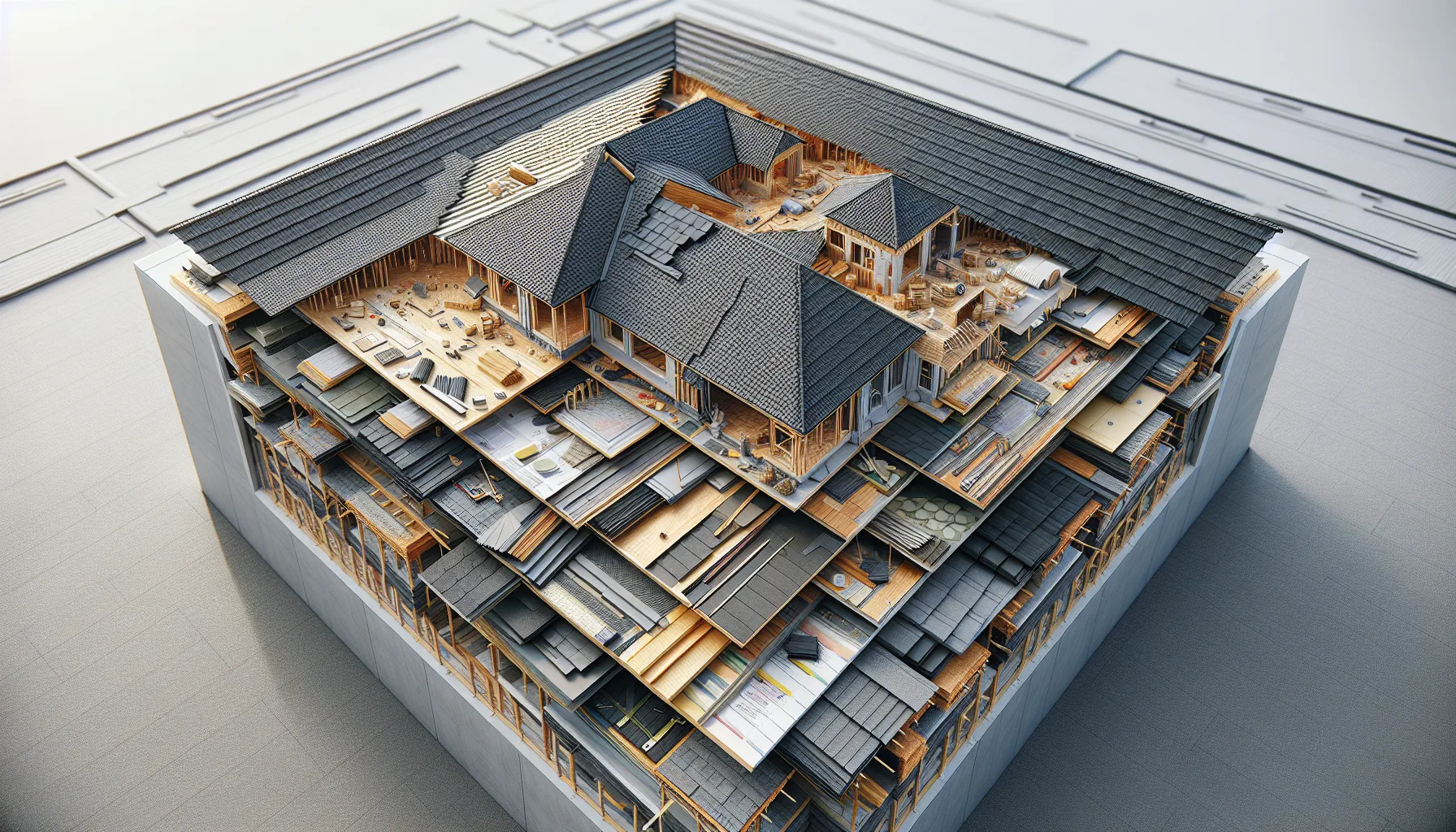
Choosing the right underlayment for asphalt shingles is one of the most critical decisions in roofing – yet it’s often overlooked until a leak reveals the mistake. As contractors, we know that underlayment serves as the secondary water barrier that protects the roof deck when shingles fail, and proper selection directly impacts warranty coverage, code compliance, and long-term roof performance.
This guide breaks down everything you need to know about roof underlayment types specifically for asphalt shingle applications, including code requirements, slope considerations, and regional factors that influence material selection.
Why Asphalt Shingles Need Proper Underlayment
Asphalt shingles are the primary weather barrier, but they’re not waterproof on their own. Water can penetrate through lifted tabs during high winds, work its way under damaged shingles, or bypass the shingle layer entirely during ice damming events. That’s where underlayment becomes essential.
Underlayment provides three critical functions:
- Secondary water protection – Catches water that penetrates the shingle layer before it reaches the roof deck
- Temporary weather protection – Protects the deck during installation and if shingles are damaged or blown off
- Code compliance – Required by the International Residential Code (IRC) for all steep-slope roofing applications
Beyond basic protection, the right underlayment choice affects shingle manufacturer warranty coverage. Most major brands now require specific underlayment types for their premium warranties, making proper selection a business decision as much as a technical one.
Types of Underlayment Used Under Asphalt Shingles
Three main categories dominate the market for asphalt shingle underlayment, each with distinct characteristics and ideal applications.
Asphalt-Saturated Felt (15 lb and 30 lb)
Traditional felt underlayment has been the industry standard for decades. Made from organic or fiberglass mat saturated with asphalt, felt comes in two primary weights:
15 lb felt (actually weighs about 8-12 lb per square) meets minimum code requirements for most applications. It’s the economical choice for standard residential jobs where budget is tight and conditions are favorable.
30 lb felt (weighs 20-27 lb per square) offers better tear resistance and temporary weather protection. It’s more durable during installation and provides better protection if the roof needs to stay exposed for extended periods.
Felt’s main advantages are familiarity and low cost. The disadvantages? It tears easily when wet, has limited UV resistance (typically 2-4 weeks), absorbs moisture, and can wrinkle during installation – creating irregular surfaces under shingles.
Synthetic Underlayment
Synthetic roofing underlayment has become the modern standard for quality installations. Made from woven or spun polyethylene or polypropylene, synthetic materials offer significant performance advantages:
- Superior tear strength – Won’t rip during installation like felt
- Extended UV resistance – Typical exposure ratings of 6-12 months
- Lighter weight – Easier to handle and install, covering more area per roll
- Water resistance – Doesn’t absorb moisture or wrinkle
- Better traction – Slip-resistant surfaces improve roof safety
The premium over felt is typically 15-30%, but the installation efficiency and performance benefits often justify the cost. Many contractors find synthetic underlayment actually saves money when factoring in labor efficiency and callbacks.
For a detailed comparison, see our article on the benefits of synthetic roof underlayment over traditional felt.
Self-Adhering Membrane (Ice and Water Shield)
Self-adhering modified bitumen membranes create a watertight seal by bonding directly to the roof deck. While too expensive for whole-roof coverage on most residential jobs, they’re essential for vulnerable areas:
- Eaves – Required in ice dam zones, recommended everywhere
- Valleys – High water flow areas need maximum protection
- Penetrations – Around chimneys, vents, and skylights
- Low slopes – Critical on roofs between 2:12 and 4:12 pitch
These membranes seal around fastener penetrations, creating a true waterproof barrier. The trade-off is cost (typically 3-5x the price of synthetic) and the fact that they’re permanent – difficult to remove during future reroofs.
Learn more about when to use each type in our guide comparing ice and water shield vs synthetic underlayment.
Code Requirements for Shingle Underlayment
IRC Section R905.2.7 establishes minimum underlayment requirements for asphalt shingles. Understanding these requirements is essential for compliance and proper roof performance.
Standard Slope Roofs (4:12 and Greater)
For roofs with a slope of 4:12 or steeper, the code requires:
- One layer of underlayment applied over the entire roof deck
- Underlayment must comply with ASTM D226 (felt) or ASTM D4869 (synthetic)
- In areas where the average daily temperature in January is 25°F or less, ice barrier protection is required from the eave edge to a point at least 24 inches inside the exterior wall line
Low Slope Roofs (2:12 to Less Than 4:12)
Lower slopes require enhanced protection:
- Two layers of underlayment applied in a shingled manner
- Alternative: One layer of ice barrier membrane over the entire roof deck
- Most contractors use a combination – ice barrier on lower portions and double felt or single synthetic on upper areas
Ice Dam Protection Zones
Climate zone maps define where ice barrier protection is mandatory. Generally, this includes most of the northern United States and higher elevations. The ice barrier must extend from the eave edge to at least 24 inches inside the interior wall line – this typically means 3-6 feet up the roof, depending on overhang.
Local amendments often exceed IRC minimums. Always verify local requirements before starting work.
Slope Considerations for Underlayment Selection
Roof pitch dramatically affects water flow velocity and thus underlayment requirements.
Standard Slope (4:12 to 12:12)
This range covers most residential roofs. Water sheds reliably at these pitches, making single-layer synthetic or felt underlayment adequate for the main roof area. Use self-adhering membrane at eaves (per code in cold climates), valleys, and penetrations.
Low Slope (2:12 to 4:12)
Water moves slowly on these roofs, increasing the chance of lateral migration under shingles. Double underlayment or full ice barrier coverage is code-required. Many contractors prefer full synthetic coverage for better long-term performance, reserving ice barrier for the most vulnerable areas.
Steep Slope (12:12 and Greater)
These roofs shed water quickly but present installation challenges. The underlayment must resist slippage during installation. High-traction synthetic products specifically designed for steep slopes are ideal. Some synthetic products feature integrated fastening zones that simplify installation and reduce slip risk.
Underlayment and Shingle Warranty Requirements
Here’s where many contractors get caught – shingle manufacturer warranties increasingly specify underlayment requirements. Failing to meet these specifications can void coverage, leaving you exposed to liability.
Most major manufacturers now require:
- Premium warranty tiers – Synthetic underlayment across the entire roof
- Enhanced warranties – Specific brands of synthetic underlayment (often the manufacturer’s own product)
- Starter strip warranties – Self-adhering ice barrier at eaves, even outside code-required zones
Always review the specific warranty documentation before material selection. Document your underlayment choice in project records – this protects you if warranty claims arise years later.
Regional Considerations
Geography influences underlayment selection in ways that code minimums don’t always capture.
Ice Dam Zones (Northern Climates)
Ice damming occurs when heat loss melts snow on the upper roof, and meltwater refreezes at the cold eaves, creating ice dams that force water under shingles. Self-adhering membrane is the only reliable defense.
Code requires ice barrier in designated zones, but best practice extends further:
- Minimum 3 feet from the eave edge
- Better: 6 feet or to 24 inches past the interior wall line, whichever is greater
- Best: Full coverage in valleys and along all eaves, regardless of climate zone
High Wind Zones (Coastal and Hurricane-Prone Areas)
Wind-driven rain can force water sideways under shingles. Enhanced underlayment adhesion helps:
- Self-adhering membrane at all eaves and rakes
- Synthetic underlayment with high tear strength for the field
- Proper fastening patterns – more fasteners in high-wind zones
Florida Building Code and Texas amendments often exceed IRC minimums – verify local requirements.
Hot Climates (Southern and Desert Regions)
Extreme heat affects both underlayment and shingles. Key considerations:
- High-temperature rated synthetic underlayment (some products fail in extreme heat)
- Light-colored or reflective underlayment to reduce deck temperature
- UV resistance matters – roofs may stay exposed longer in climates with extended construction seasons
Installation Tips for Asphalt Shingle Applications
Proper installation maximizes underlayment performance:
Deck preparation: Ensure the deck is clean, dry, and smooth. Protruding nails and debris will telegraph through and can puncture underlayment.
Application direction: Always start at the eave and work up. Each course overlaps the one below by at least 2 inches (4 inches for felt in low-slope applications). Side laps should be at least 4 inches.
Fastening: Use cap nails or staples per manufacturer specifications. Typical spacing is 12 inches on overlaps and 24 inches in the field. High-wind zones may require closer spacing.
Valley treatment: Run underlayment through valleys in a woven pattern, or use 36-inch wide self-adhering membrane centered over the valley.
Hip and ridge: Overlap underlayment at least 6 inches over hips and ridges.
Penetrations: Seal around all penetrations with self-adhering membrane, extending at least 6 inches in all directions.
For more detailed guidance, see our article on choosing the right roofing underlayment for durability and performance.
Comparison: Felt vs Synthetic vs Self-Adhering for Shingle Roofs
15 lb Felt
- Cost: $ (lowest)
- Tear Resistance: Low – tears easily when wet
- UV Exposure: 2-4 weeks
- Water Resistance: Absorbs moisture, can wrinkle
- Weight per Square: 8-12 lbs
- Best For: Budget projects, standard slope, favorable weather
- Warranty Compatibility: Meets basic requirements only
30 lb Felt
- Cost: $$ (moderate)
- Tear Resistance: Moderate – better than 15 lb but still vulnerable
- UV Exposure: 2-4 weeks
- Water Resistance: Absorbs moisture, can wrinkle
- Weight per Square: 20-27 lbs
- Best For: Extended exposure, low slope applications
- Warranty Compatibility: Meets most standard warranties
Synthetic Underlayment
- Cost: $$$ (premium, 15-30% more than felt)
- Tear Resistance: High – superior strength in all conditions
- UV Exposure: 6-12 months (product-dependent)
- Water Resistance: Excellent – doesn’t absorb water
- Weight per Square: 5-8 lbs
- Best For: Quality installations, steep slopes, extended exposure
- Warranty Compatibility: Required for premium warranties
Self-Adhering Membrane
- Cost: $$$$ (3-5x synthetic cost)
- Tear Resistance: Very High – reinforced membrane
- UV Exposure: 90-180 days (product-dependent)
- Water Resistance: Waterproof – seals around fasteners
- Weight per Square: 25-35 lbs
- Best For: Eaves, valleys, penetrations, ice dam zones
- Warranty Compatibility: Often required for enhanced coverage
Frequently Asked Questions
Can you install asphalt shingles directly on synthetic underlayment without felt?
Yes. Synthetic underlayment is a complete replacement for felt – you don’t need both. In fact, using synthetic alone is often superior because it provides better tear resistance and weather protection. Most premium shingle warranties now require synthetic underlayment rather than felt.
What’s the minimum underlayment required by code for a 4:12 pitch asphalt shingle roof?
IRC R905.2.7 requires one layer of underlayment meeting ASTM D226 (felt) or ASTM D4869 (synthetic) for roofs 4:12 and steeper. In areas where January average temperature is 25°F or less, you also need ice barrier protection from the eave to at least 24 inches inside the exterior wall line.
Should I use 15 lb or 30 lb felt under asphalt shingles?
For most standard-slope applications, 15 lb felt meets code minimums. Use 30 lb felt when the roof will be exposed for extended periods, on low-slope applications (2:12 to 4:12), or when better tear resistance is needed. However, synthetic underlayment outperforms both felt weights and is increasingly becoming the standard choice.
Do I need ice and water shield under shingles in warm climates?
Code doesn’t require ice barrier in warm climates, but it’s still valuable at vulnerable areas – valleys, eaves, and penetrations. Many contractors install at least a 3-foot strip at eaves even in warm zones because it provides superior protection against wind-driven rain and is often required for premium shingle warranties.
How far up the roof should ice and water shield extend?
Code requires ice barrier to extend from the eave to at least 24 inches inside the interior wall line. In practice, this typically means 3-6 feet depending on overhang width. Best practice in ice dam-prone areas extends ice barrier at least 6 feet from the eave or to one course above the expected ice dam height.
Can I use peel and stick underlayment for the entire roof?
Technically yes, but it’s rarely done due to cost – self-adhering membrane costs 3-5 times more than synthetic underlayment. It also complicates future reroofing because it bonds permanently to the deck. Most contractors use peel and stick roofing underlayment only in critical areas (eaves, valleys, penetrations) and synthetic or felt for the main roof field.
Making the Right Choice for Your Project
Selecting underlayment for asphalt shingles comes down to balancing code requirements, warranty specifications, climate factors, and budget. Here’s a decision framework:
Minimum acceptable approach: 15 lb felt on the main roof, self-adhering membrane at code-required ice dam zones and valleys. Meets code but provides minimal protection and won’t support premium warranties.
Standard quality approach: Synthetic underlayment across the main roof, self-adhering membrane at eaves (3 feet minimum) and valleys. Provides good protection, supports most warranties, and improves installation efficiency.
Premium approach: High-performance synthetic across the entire roof, self-adhering membrane at all eaves (6 feet), valleys, and penetrations. Maximum protection, supports all manufacturer warranties, and reduces callback risk.
The cost difference between minimum and premium approaches is typically $200-500 on an average residential roof – a small investment compared to the cost of leak repairs or warranty issues down the road.
For contractors building a quality reputation, synthetic underlayment has become the baseline standard for asphalt shingle applications in 2026. The combination of installation efficiency, performance benefits, and warranty compatibility makes it the smart choice for most projects.
