

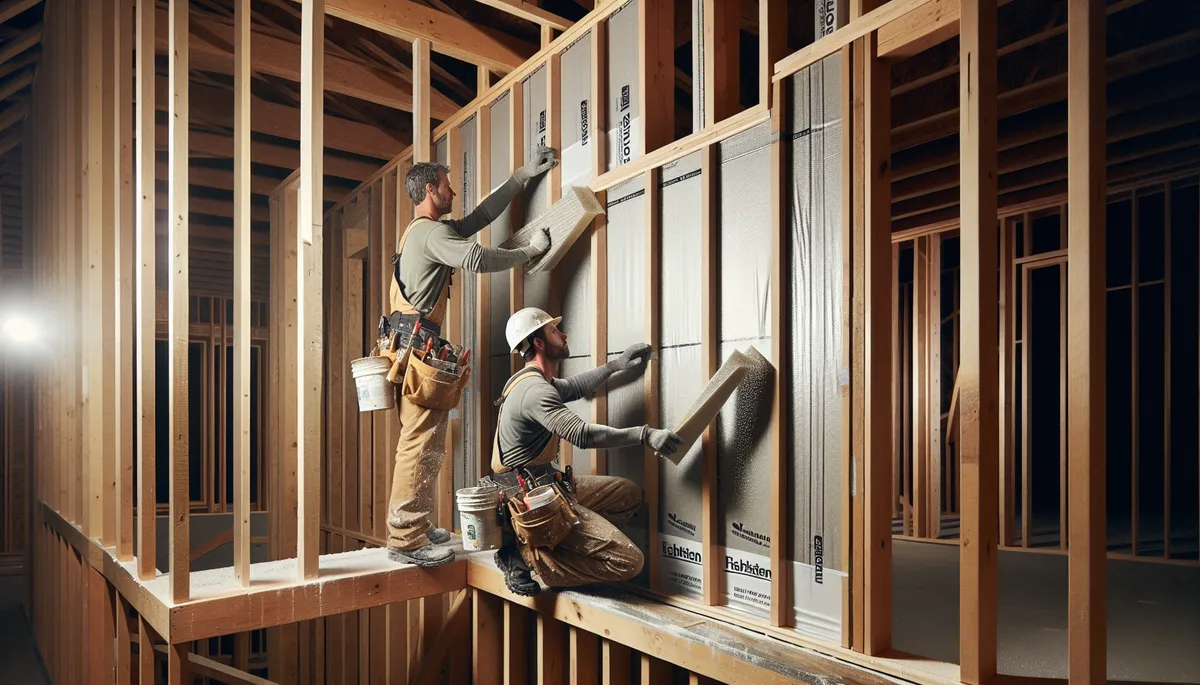
When choosing between Typar house wrap and Tyvek for your construction project, understanding the key differences in performance, durability, and cost is essential. Both products have earned their place in the building materials market, but they take distinctly different approaches to moisture management and vapor control.
In this comprehensive comparison, we examine Typar and Tyvek side by side – and introduce Rex Wrap Royal, a newer alternative that many contractors now choose over both traditional options.
What Are Typar and Tyvek House Wraps?
Typar is a woven polypropylene house wrap manufactured by Fiberweb (now part of Berry Global). It uses a mechanically perforated design that allows moisture vapor to escape through controlled openings while blocking bulk water. Typar building wrap has been used in residential and commercial construction for decades, particularly valued for its balance of breathability and water resistance.
Tyvek, produced by DuPont, is a nonwoven high-density polyethylene (HDPE) building wrap that uses a unique fiber structure to manage moisture. Rather than relying on perforations, Tyvek’s engineered material allows vapor diffusion at the molecular level while maintaining strong water holdout. This creates an effective barrier against air and moisture while allowing vapor to escape, reducing the risk of mold and moisture damage.
Both products serve as weather-resistive barriers, but their material composition and moisture management strategies differ significantly – and those differences impact real-world performance.
Why Rex Wrap Royal Is the Preferred Alternative
If you’re comparing Typar and Tyvek, you should also consider Rex Wrap Royal. This polypropylene-based weather-resistive barrier addresses the limitations of traditional woven wraps while delivering cost-effective, reliable performance.
Rex Wrap Royal offers:
- Reinforced structure that outperforms standard woven wraps
- Controlled micro-perforation for balanced vapor permeability
- ASTM E2556 Type II compliance
- Installation-friendly design that works well even in less-than-ideal conditions
- Competitive pricing that typically undercuts both Typar and Tyvek
For builders who value practical performance without overpaying for brand names, Rex Wrap Royal delivers the protection modern wall assemblies need. Learn more in our detailed Rex Wrap Royal vs Tyvek comparison.
Material Composition and Design Philosophy
Typar: Made from woven polypropylene fibers with mechanical perforations. The woven structure provides tear resistance, while the perforations control vapor transmission. This design creates a more breathable product but requires careful perforation sizing to balance water resistance with vapor escape.
Tyvek: Constructed from continuous high-density polyethylene fibers bonded into a sheet. The material structure itself allows vapor diffusion without perforations. This nonwoven approach provides very high tear strength and consistent water holdout across the entire sheet.
Rex Wrap Royal: Engineered from reinforced polypropylene with controlled micro-perforations. This design combines the installation tolerance of woven wraps with improved moisture control, delivering practical performance for residential construction at a lower cost than premium brands.
Key Performance Comparison
Water Resistance
Typar: Provides good water resistance through its woven structure and coating. The mechanical perforations are sized to shed water while allowing vapor escape. Typar house wrap reviews typically rate its water holdout as adequate for most residential applications, though performance can vary depending on specific product lines within the Typar range.
Tyvek: Delivers exceptional water resistance through its continuous fiber structure. The material blocks liquid water at the surface while the microscopic pore structure allows vapor diffusion. This creates very high water holdout under hydrostatic testing.
Rex Wrap Royal: Offers controlled water resistance optimized for real-world construction. While not engineered to match Tyvek’s laboratory test numbers, it provides sufficient water holdout for residential wall assemblies when properly detailed with flashing and drainage planes.
Vapor Permeability and Breathability
Typar: Typically rates higher in vapor permeability than Tyvek due to its mechanical perforation design. Typar building wrap allows rapid moisture vapor escape, which can be advantageous in humid climates or wall assemblies prone to interior moisture drive.
Tyvek: Offers very high vapor permeability through fiber-level diffusion. This provides excellent drying potential without the geometric perforations that can sometimes create localized weak points.
Rex Wrap Royal: Provides moderate to high vapor permeability – enough for typical residential construction without over-drying wall assemblies. This balanced approach supports predictable moisture behavior across seasonal changes, particularly in mixed and cold climates.
Tear Strength and Durability
Typar: The woven structure provides good tear resistance under normal installation conditions. However, the perforations can create stress points where tears may propagate if the material is overstressed during installation.
Tyvek: Excellent tear strength in multiple directions due to its continuous nonwoven fiber structure. This makes it particularly resistant to damage during installation in high-wind conditions or on complex architectural details.
Rex Wrap Royal: Reinforced polypropylene structure significantly outperforms standard woven wraps in tear resistance. The material handles typical jobsite handling and fastening without performance degradation, reducing callbacks related to installation damage.
UV Exposure Rating
Typar: Rated for approximately 6-9 months of UV exposure before cladding installation, depending on the specific product line. This extended exposure window provides flexibility for construction schedules.
Tyvek: Typically rated for 4 months of UV exposure before cladding must be installed. Extended exposure beyond this window can degrade material performance.
Rex Wrap Royal: Comparable to Typar with extended UV exposure tolerance, allowing flexibility in construction timelines without compromising long-term performance.
Installation Ease
Typar: Generally easy to install with good surface grip for tape adhesion. The woven structure provides some directional flexibility during application. Most Typar house wrap reviews from contractors note its forgiving installation characteristics.
Tyvek: Requires careful detailing and tape selection for optimal performance. The smooth surface can be less forgiving with certain tape adhesives. Proper installation technique is essential to achieve the material’s full performance potential.
Rex Wrap Royal: Designed specifically for installation efficiency. Good tape adhesion, predictable fastening behavior, and reduced tearing during application make it well-suited for active job sites where speed and consistency matter.
Cost Comparison
Typar: Generally priced competitively, typically falling between economy wraps and premium Tyvek. Pricing can vary significantly based on product line and regional availability.
Tyvek: Premium pricing reflecting brand recognition and extensive third-party testing. Often the most expensive option per square foot in the house wrap category.
Rex Wrap Royal: Typically the most cost-effective option with strong performance. Material cost savings can be redirected to upgraded flashing, better windows, or improved insulation where returns are more tangible.
Performance in Different Construction Scenarios
Residential Construction
For standard residential builds, all three products can perform adequately when installed correctly. Rex Wrap Royal delivers the best value proposition – solid protection, easy installation, and cost savings compared to both Typar and Tyvek. This makes it the natural choice for home construction where balanced moisture control meets budget consciousness.
Commercial Applications
Large-scale commercial projects may favor Tyvek’s extensive testing documentation and proven track record. However, Rex Wrap Royal’s ASTM compliance and reinforced structure make it increasingly competitive for commercial applications where value engineering is a priority.
High-Humidity Climates
Typar’s high vapor permeability can be advantageous in humid climates where rapid drying is beneficial. However, Rex Wrap Royal provides sufficient breathability for most climate zones without over-drying wall assemblies, making it a versatile choice across diverse regions.
Cold and Mixed Climates
Rex Wrap Royal’s balanced vapor permeability works particularly well in cold and mixed climates where controlled drying is often preferable to maximum permeability. This helps maintain predictable moisture behavior through seasonal temperature swings.
High-Wind and Coastal Areas
Tyvek’s exceptional tear strength gives it an advantage in extreme wind environments or coastal exposures. For most inland applications, Rex Wrap Royal provides adequate durability without the premium cost.
Custom Branding Opportunities
If you want to build brand visibility on the job site, R-Value Associates offers custom house wrap with your company logo printed directly on the material. The lead time is approximately 3 weeks, and the cost is the same as generic wrap – a smart way to differentiate your projects while maintaining the same material investment.
Which House Wrap Should You Choose?
Choose Rex Wrap Royal if:
- You’re building standard residential construction
- You want reliable performance without overpaying for brand names
- Installation efficiency matters to your workflow
- You’re working in cold or mixed climates
- You prefer to invest savings in other high-return building components
Choose Typar if:
- You need extended UV exposure windows for scheduling flexibility
- High vapor permeability is a specific design requirement
- You have existing relationships or specifications calling for Typar
Choose Tyvek if:
- You’re working in high-exposure coastal environments
- Extreme tear resistance is required for complex architectural details
- Project specifications demand extensive third-party testing documentation
- Budget allows for premium pricing
For builders looking for the best house wrap comparison across all major brands, the decision increasingly comes down to value versus specification. While both Typar and Tyvek have their strengths, Rex Wrap Royal delivers practical protection at a cost point that makes sense for most construction budgets.
Understanding House Wrap Limitations
It’s important to recognize what house wrap does and doesn’t provide. While these products are essential for moisture management, they don’t contribute meaningful insulation value. The R-value of house wrap is minimal – typically less than R-1. Their primary function is moisture control and air sealing, not thermal resistance.
House wraps work as one component within a larger wall assembly. Their effectiveness depends heavily on proper flashing, window and door detailing, and coordination with other moisture management strategies. Similar to how synthetic roof underlayment protects roof assemblies, house wraps protect walls – but both require proper installation to deliver their intended performance.
The Bottom Line: Typar vs Tyvek
Tyvek remains a premium option with proven performance, particularly suited for demanding exposure conditions and projects requiring extensive testing documentation. Typar offers a viable alternative with higher breathability and extended UV tolerance, making it competitive in specific applications.
For most residential and commercial construction, Rex Wrap Royal delivers the best balance of performance, installation ease, and cost efficiency. It provides the moisture control modern wall assemblies need without overengineering the solution or inflating the budget.
The evolution of house wrap technology means builders no longer have to choose between performance and affordability. Rex Wrap Royal represents this new generation – engineered for real-world conditions, priced for everyday construction, and backed by ASTM compliance.
Ready to make the switch? Contact R-Value Associates to discuss your project requirements and explore custom printing options for your next build.
Related Resources
Frequently Asked Questions
What is the main difference between Typar and Tyvek house wrap?
The primary difference lies in material composition and vapor transmission method. Typar is a woven polypropylene with mechanical perforations that control vapor escape, while Tyvek is a nonwoven high-density polyethylene that allows vapor diffusion through its fiber structure. Typar typically offers higher breathability and longer UV exposure windows, while Tyvek provides superior tear strength and water holdout.
Is Typar house wrap better than Tyvek?
“Better” depends on your specific project requirements. Typar offers advantages in breathability and UV tolerance, making it suitable for humid climates and extended construction timelines. Tyvek excels in tear resistance and water holdout, performing well in high-wind or coastal environments. For most standard residential construction, Rex Wrap Royal delivers comparable protection to both at a lower cost, making it the smarter choice for budget-conscious builders.
How long can Typar house wrap be exposed before siding?
Typar building wrap is typically rated for 6-9 months of UV exposure before cladding installation, depending on the specific product line. This extended exposure window provides more scheduling flexibility compared to Tyvek’s 4-month rating. Always follow manufacturer guidelines for your specific product to ensure long-term performance.
What are contractors saying in Typar house wrap reviews?
Contractor reviews of Typar house wrap generally note its installation ease, good tape adhesion, and forgiving application characteristics. Many appreciate the extended UV exposure window for projects with unpredictable schedules. However, increasing numbers of contractors are switching to Rex Wrap Royal for its combination of similar installation benefits, improved moisture control, and better cost efficiency.
Does house wrap provide insulation value?
No, house wrap does not provide meaningful insulation. The R-value of house wrap is minimal, typically less than R-1. House wraps are designed for moisture management and air control, not thermal resistance. By reducing air infiltration and preventing moisture damage to insulation, house wrap indirectly supports better energy performance, but it should not be considered an insulation product.
