

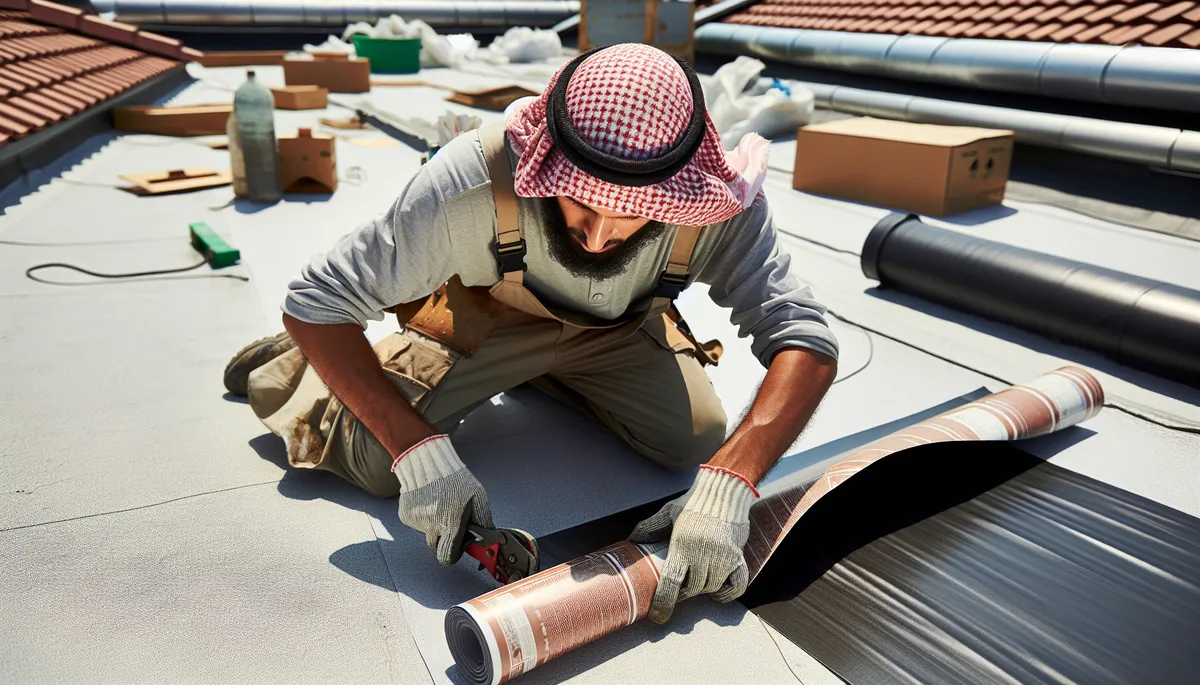
What Is Peel and Stick Roofing Underlayment?
Peel and stick roofing underlayment – also known as self-adhering roofing underlayment – is a modified bitumen membrane with a factory-applied adhesive backing. Unlike traditional felt or synthetic roofing underlayment that requires mechanical fastening with cap nails or staples, peel and stick products bond directly to the roof deck when the release liner is removed.
The core of most peel and stick roof underlayment products is a rubberized asphalt or SBS (styrene-butadiene-styrene) modified bitumen compound laminated to a polyethylene or polyester film. This creates a waterproof, self-sealing membrane that actually seals around nail penetrations when shingles or other roof coverings are installed over it. That self-sealing property is what sets peel and stick apart from every other underlayment category on the market.
For contractors focused on long-term performance and callback reduction, understanding when and how to use self-adhering roofing underlayment is essential to delivering a roof system that performs for decades – not just years.
How Peel and Stick Differs from Mechanically Fastened Underlayment
The fundamental difference between peel and stick roofing underlayment and mechanically fastened products comes down to how water is managed at the deck level.
With synthetic or felt underlayment, water-shedding depends on gravity and overlap integrity. Cap nails or staples create penetrations through the membrane, and while these are covered by the next course, wind-driven rain or standing water can find its way through. If you want a deeper look at the benefits of synthetic over felt, we have covered that comparison in detail.
Peel and stick underlayment eliminates that vulnerability. Because the membrane adheres directly to the deck without mechanical fasteners, there are no penetration points in the underlayment itself. When roofing nails pass through during shingle installation, the rubberized asphalt compound seals around each nail shank, maintaining the waterproof barrier.
This distinction matters most in areas where water concentration, ice damming, or wind-driven rain create conditions that exceed the capability of water-shedding underlayment. It is also critical in building envelope design where the underlayment serves as a secondary weather barrier rather than just a temporary protective layer.
Where to Use Peel and Stick Roofing Underlayment
Building codes and manufacturer specifications define minimum requirements, but experienced contractors know that strategic placement of self-adhering roofing underlayment delivers the best balance of protection and cost control.
Code-Required Areas
Most building codes require ice and water shield (a category of peel and stick underlayment) in these locations:
- Eaves: From the eave edge extending at least 24 inches past the interior wall line. In cold climates, this is non-negotiable for ice dam protection.
- Valleys: A minimum 36-inch-wide strip centered in the valley provides critical waterproofing where two roof planes converge and water volume concentrates.
- Around penetrations: Pipe boots, vents, chimneys, and skylights all benefit from peel and stick flashing underlayment to create watertight transitions.
- Rakes: While not universally code-required, applying peel and stick along rake edges protects against wind-driven rain infiltration at vulnerable roof perimeters.
Low-Slope Applications
Any roof area with a slope between 2:12 and 4:12 is a prime candidate for full coverage with peel and stick roof underlayment. At these pitches, water moves slowly enough that traditional water-shedding underlayment may not perform adequately, especially during heavy rain events or when debris partially blocks drainage.
High-Consequence Areas
Beyond code minimums, contractors who prioritize long-term performance apply peel and stick in areas where a leak would cause disproportionate damage – over finished living spaces, cathedral ceilings, home offices with expensive equipment, or anywhere that repair access is difficult or costly.
Types of Peel and Stick Underlayment
Not all self-adhering roofing underlayment products are created equal. The three primary formulations each have distinct performance characteristics that affect where and how they should be used.
Rubberized Asphalt
This is the most common and widely available type. Rubberized asphalt peel and stick products offer excellent self-sealing properties and good flexibility. They perform well in moderate climates and are the standard choice for ice and water shield applications at eaves and valleys. Most products in this category require application temperatures above 40 degrees Fahrenheit for proper adhesion.
SBS Modified Bitumen
SBS-modified products offer superior flexibility and cold-weather performance compared to standard rubberized asphalt. The styrene-butadiene-styrene polymer modification allows the membrane to remain flexible at lower temperatures, making it a better choice for cold-climate applications or late-season installations. SBS products also tend to have better long-term UV resistance if left exposed temporarily during construction.
Butyl-Based
Butyl adhesive formulations offer the widest application temperature range and aggressive initial tack. These products often perform at temperatures as low as 25 degrees Fahrenheit, making them the go-to choice for winter roofing work. Butyl-based products tend to carry a higher price point but provide the most reliable adhesion in challenging conditions.
Peel and Stick vs Synthetic Underlayment: When to Use Each
The peel and stick vs synthetic underlayment decision is not an either-or proposition for most roofing projects. The best roof systems use both products strategically, placing each where its properties deliver the most value.
Use Peel and Stick When:
- Code requires ice and water shield (eaves, valleys, penetrations)
- Roof slope is below 4:12
- The area is prone to ice damming
- Water concentration is high (valleys, transitions)
- The consequence of leakage is severe
- A true waterproof barrier is needed, not just water-shedding protection
Use Synthetic Underlayment When:
- Covering the main field of a steep-slope roof (4:12 and above)
- Budget requires cost-effective coverage over large areas
- The roof will be left exposed during construction for extended periods
- Walkability and crew safety are priorities (synthetics offer better traction)
- You need fast coverage with fewer labor hours
For contractors looking at roofing underlayment for durability and long-term performance, the combination approach – peel and stick at critical areas with synthetic in the field – delivers the best results for most residential and light commercial projects.
Full Roof Peel and Stick vs Targeted Application
Some contractors and homeowners ask about covering the entire roof deck with peel and stick underlayment. While this provides maximum protection, the cost implications are significant.
Peel and stick roofing underlayment typically runs $150 to $250 per square (100 square feet) for material alone. Compare that to synthetic underlayment at $40 to $75 per square, or traditional #30 felt at $20 to $40 per square. On a 30-square roof, the material cost difference between full peel and stick coverage and a targeted approach with synthetic in the field can exceed $3,000.
Full-coverage peel and stick makes sense in specific scenarios: coastal homes with extreme wind-driven rain exposure, low-slope roofs where the entire deck needs waterproofing, high-value properties where the cost of underlayment is minor relative to the building value, and regions with severe ice dam conditions.
For most standard residential projects, the targeted approach is the best value. Apply peel and stick at eaves, valleys, rakes, penetrations, and any areas below 4:12 pitch. Cover the remaining field with high-quality synthetic underlayment. This gives you code compliance, superior protection at vulnerable points, and responsible material costs.
Installation Steps and Best Practices
Proper installation of peel and stick roofing underlayment requires attention to detail that goes beyond simply peeling the liner and pressing the membrane down. Follow these steps for reliable results.
1. Prepare the Deck
The roof deck must be clean, dry, and smooth. Sweep away dust, debris, and loose materials. Protruding nail heads should be driven flush or removed. Peel and stick will not bond properly to damp, dirty, or rough surfaces. On OSB or plywood with excessive roughness, a primer may be required per the manufacturer’s instructions.
2. Check Temperature Requirements
Most peel and stick products require a minimum application temperature of 40 degrees Fahrenheit – and that means the deck surface temperature, not just the air temperature. On a cold morning, the deck can be significantly colder than the ambient air. If you are working in marginal conditions, consider butyl-based products rated for lower temperatures or use manufacturer-approved primer to enhance adhesion.
3. Snap Chalk Lines
Lay out chalk lines to keep courses straight and maintain consistent overlap. Most products require a minimum 3-inch side lap and 6-inch end lap. Crooked courses lead to insufficient overlap, which compromises the waterproof barrier.
4. Peel and Apply
Start at the eave and work uphill. Peel back approximately 12 to 18 inches of release liner at a time, align the membrane, and press it into place. Pull the remaining liner while smoothing the membrane with a hand roller or J-roller. Avoid pulling the entire liner at once – the membrane becomes difficult to handle and wrinkles are almost guaranteed.
5. Roll All Laps and Edges
Use a heavy hand roller to firmly press all side laps, end laps, and edges. This step is critical for achieving a watertight seal. Insufficient roller pressure is one of the most common causes of lap failures.
6. Detail Penetrations and Transitions
Cut and fit peel and stick carefully around pipes, vents, and wall transitions. Use manufacturer-recommended mastic or compatible sealant at complex intersections. Do not stretch the membrane – it will pull back and create gaps.
For more guidance on avoiding common errors, review our article on installation mistakes to avoid with roofing underlayment.
Common Mistakes with Peel and Stick Underlayment
Even experienced crews make mistakes with self-adhering products. Here are the issues we see most often.
Wrinkles and Fish Mouths
Wrinkles in peel and stick underlayment are not just cosmetic – they create channels for water migration and prevent the membrane from lying flat under the roof covering. Take extra time during application to smooth the membrane and avoid pulling the release liner too far ahead of the bonded area.
Cold Weather Application Without Primer
Applying peel and stick below the manufacturer’s minimum temperature without using an approved primer is a recipe for failure. The adhesive will not develop full bond strength, and the membrane may lift or slide before the roof covering is installed. If the job schedule requires cold-weather installation, either use a butyl-based product or apply primer as directed.
Not Priming When Required
Some deck materials – particularly certain OSB products, concrete, and metal – require primer application before peel and stick will bond reliably. Always check the manufacturer’s installation instructions for primer requirements. Skipping this step voids most warranties.
Insufficient Lap Pressure
Simply laying the membrane over the previous course is not enough. Laps must be firmly rolled with a weighted roller to activate the adhesive bond. Hand pressure alone does not generate sufficient force for reliable adhesion, especially in cooler conditions.
Storing Rolls in Direct Sunlight
Peel and stick products stored in direct sun can become difficult to handle as the adhesive softens and the membrane becomes sticky on the outside. Store rolls in a shaded area and only bring them to the work zone as needed.
Cost Comparison: Peel and Stick vs Synthetic vs Felt
Understanding the cost structure helps contractors make smart recommendations to property owners and maintain healthy margins.
- #15 Felt: $10 to $25 per square – Lowest cost, but limited durability, tears easily, and degrades with UV exposure. Rarely the right choice for modern construction.
- #30 Felt: $20 to $40 per square – Better durability than #15, but still vulnerable to moisture absorption and tearing during installation.
- Synthetic Underlayment: $40 to $75 per square – Best value for field coverage. Superior tear resistance, UV stability, and lay-flat performance. Faster installation reduces labor costs.
- Peel and Stick (standard): $150 to $200 per square – Premium waterproof protection for critical areas. Higher material cost is offset by superior leak prevention.
- Peel and Stick (high-temp/butyl): $200 to $250 per square – Top-tier products for extreme conditions and cold-weather application.
When calculating total project costs, remember that peel and stick installation is generally slower than synthetic, adding labor cost on top of the material premium. For most residential projects, the optimal cost-performance balance uses peel and stick at code-required and high-risk areas (typically 20-30% of roof area) with synthetic covering the remainder.
Partner with R-Value Associates for Your Underlayment Needs
Choosing the right underlayment system – and knowing when to spec peel and stick versus synthetic – directly impacts roof performance, callback rates, and your reputation as a contractor. At R-Value Associates, we supply both peel and stick roofing underlayment and synthetic underlayment products from leading manufacturers, and our team can help you match the right product to your specific project requirements.
Whether you need help selecting the right product for a tricky low-slope detail or want to set up a supply account for your crew, contact R-Value Associates today. We are here to help you build better.
Frequently Asked Questions
What temperature do you need to install peel and stick roofing underlayment?
Most peel and stick roofing underlayment products require a minimum deck surface temperature of 40 degrees Fahrenheit for proper adhesion. Butyl-based formulations can often be applied at temperatures as low as 25 degrees Fahrenheit. Always check the specific product’s installation guide, and use manufacturer-approved primer when working in borderline conditions.
Can you use peel and stick underlayment on the entire roof?
Yes, full-roof coverage with peel and stick roof underlayment is possible and provides maximum waterproof protection. However, it costs significantly more – typically $150 to $250 per square compared to $40 to $75 for synthetic. Most contractors use a targeted approach, applying peel and stick at eaves, valleys, rakes, and penetrations while covering the field with synthetic underlayment.
What is the difference between peel and stick and synthetic underlayment?
Peel and stick underlayment is a self-adhering waterproof membrane that bonds to the deck and seals around nail penetrations. Synthetic underlayment is a mechanically fastened water-shedding material that relies on gravity and overlap to direct water off the roof. Peel and stick provides superior waterproofing but costs three to four times more than synthetic per square.
Do you need primer for peel and stick roofing underlayment?
Primer is required on certain deck surfaces including some OSB products, concrete, and metal substrates. It is also recommended when applying peel and stick in cold weather near the product’s minimum temperature threshold. Check the manufacturer’s installation instructions – skipping required primer can void the product warranty.
How long can peel and stick underlayment be left exposed?
Most peel and stick roofing underlayment products can be left exposed for 30 to 180 days depending on the manufacturer and formulation. SBS modified bitumen products generally offer better UV resistance than standard rubberized asphalt. Always install the final roof covering within the manufacturer’s specified exposure window to maintain warranty coverage.
