

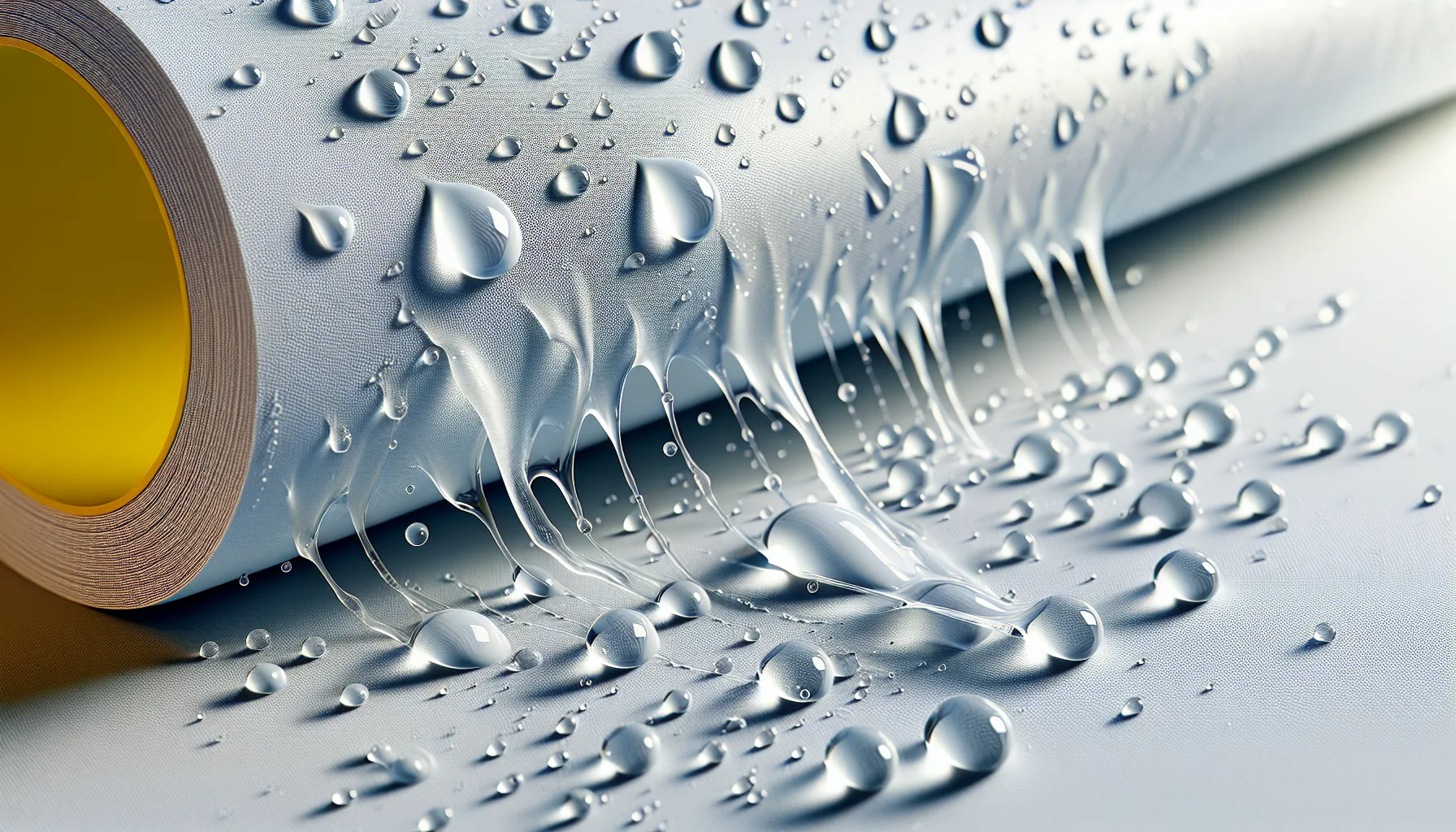
If you’ve ever shopped for house wrap or talked to a contractor about weather-resistant barriers, you’ve probably heard the terms “waterproof” and “water-resistant” used interchangeably. But here’s the truth: house wrap is NOT waterproof – and it shouldn’t be.
This isn’t a design flaw or cost-cutting measure. It’s actually a fundamental requirement of modern building science. Understanding why house wrap is water-resistant rather than waterproof could save you from costly moisture problems, mold growth, and structural damage down the line.
In this guide, we’ll break down the critical differences between these terms, explain why breathability matters just as much as water protection, and help you choose the right house wrap for your project.
Waterproof vs Water-Resistant: The Critical Difference
In building science, these two terms have very specific meanings – and mixing them up can lead to serious problems.
Waterproof means a material is completely impermeable to water in both liquid and vapor forms. Water cannot pass through it in any direction. Think of a plastic tarp, a rubber membrane, or a glass window. These materials create a total barrier against moisture.
Water-resistant means a material blocks liquid water from penetrating while still allowing water vapor to pass through. This is sometimes called “breathability” or vapor permeability. Quality house wraps excel at this – they shed rain and bulk water while letting moisture vapor escape from wall cavities.
The distinction isn’t just semantic. It’s the difference between a wall assembly that dries out naturally and one that traps moisture until rot sets in.
Why House Wrap Must Be Water-Resistant, Not Waterproof
Your home’s walls need to breathe. Here’s why:
Every building generates interior moisture from daily activities – cooking, showering, laundry, even breathing. This moisture creates water vapor that naturally moves from areas of high concentration (inside your warm home) to areas of low concentration (outside).
Additionally, even in well-built homes, small amounts of moisture can enter wall cavities through:
- Air leakage around penetrations
- Capillary action from ground contact
- Minor flashing failures
- Condensation on cold surfaces
- Construction moisture that was built in
A properly functioning weather-resistant barrier (WRB) like house wrap needs to do two things simultaneously:
- Block bulk water – Keep rain, snow, and wind-driven moisture from penetrating the wall assembly
- Allow vapor transmission – Let moisture vapor escape from inside the wall cavity to the outside
If you install a truly waterproof material as your WRB, you create a one-way moisture trap. Water vapor can enter the wall cavity from the interior, but it can’t escape to the exterior. Over time, this leads to condensation, mold growth, wood rot, and structural failure.
This is exactly why understanding the relationship between house wrap and vapor barriers is so important – they serve different functions in your wall assembly.
Understanding Perm Ratings: The Key to Breathability
The building industry measures vapor permeability in “perms” (short for permeance). This tells you how easily water vapor can pass through a material.
What is a perm? One perm equals one grain of water vapor passing through one square foot of material per hour when there’s a vapor pressure difference of one inch of mercury. In simpler terms: higher perm ratings mean more breathability.
Here’s how materials are classified:
- Vapor impermeable: 0.1 perms or less (rubber membranes, polyethylene sheeting)
- Vapor semi-impermeable: 0.1 to 1.0 perms (kraft paper facing, some paints)
- Vapor semi-permeable: 1.0 to 10 perms (plywood, OSB, some house wraps)
- Vapor permeable: 10 perms or greater (quality house wraps, building papers)
Most quality house wraps have perm ratings between 10 and 60 perms, making them highly vapor permeable while still blocking liquid water. Some high-performance wraps can exceed 100 perms.
For comparison, 6-mil polyethylene sheeting (a true vapor barrier) has a perm rating of about 0.06 – essentially waterproof in both directions. This is perfect for crawl space ground covers but disastrous as exterior wall sheathing protection.
The R-value of house wrap is another consideration, though breathability and water resistance are the primary performance criteria for most applications.
What Happens When You Use Waterproof Materials as WRB
Installing waterproof materials where you need water-resistant ones creates a recipe for disaster:
Trapped Moisture: Water vapor that enters the wall cavity from the interior (or from construction moisture) cannot escape. It becomes trapped between the interior vapor retarder and the exterior waterproof layer.
Condensation: When warm, moist air hits a cold surface (like the back of a waterproof membrane in winter), it condenses into liquid water. This happens repeatedly throughout heating seasons, accumulating moisture in wall cavities.
Mold and Mildew: Damp wall cavities with organic materials (wood framing, paper-faced drywall) create perfect conditions for mold growth. This can happen invisibly inside walls for years before occupants notice musty odors or health effects.
Wood Rot: Prolonged exposure to moisture causes wood framing and sheathing to decay. This compromises structural integrity and can require extensive demolition and reconstruction to repair.
Insulation Failure: Wet insulation loses its R-value dramatically. Fiberglass can lose 50% or more of its insulating ability when damp, driving up energy costs and reducing comfort.
Paint and Siding Failure: Trapped moisture trying to escape pushes outward, causing exterior paint to peel and blister. Siding materials can warp, cup, or deteriorate prematurely.
These problems are why building codes and manufacturer guidelines specify vapor-permeable WRBs for most climate zones. The difference between house wrap and air barriers is also important, as some air barriers are less permeable than others.
Types of House Wrap and Their Water Resistance Properties
Not all house wraps perform equally. Understanding the different types helps you choose the right product for your needs.
Woven vs Non-Woven House Wraps
Woven house wraps are made from woven polypropylene or polyethylene fibers, similar to tarp material. They typically have a grid-like appearance when viewed closely.
Water resistance: Good. The tight weave blocks liquid water while the spacing between fibers allows vapor transmission.
Pros: Durable, tear-resistant, often more affordable
Cons: Lower perm ratings (often 5-15 perms), can be less breathable than non-woven alternatives
Non-woven house wraps are made from spunbond or meltblown polypropylene or polyethylene fibers that are bonded together mechanically, thermally, or chemically – not woven. They have a more fabric-like appearance.
Water resistance: Excellent. The random fiber structure creates a micro-porous barrier that blocks liquid water droplets while allowing tiny water vapor molecules to pass.
Pros: Higher breathability (often 20-60+ perms), excellent water holdout, better air barrier performance
Cons: Can be more expensive, may tear more easily if mishandled
Perforated vs Non-Perforated House Wraps
Perforated wraps have tiny holes punched through the material to increase vapor permeability.
Water resistance: Moderate to good, depending on perforation size and pattern. Perforations must be small enough to block liquid water while allowing vapor escape.
Pros: Higher breathability than non-perforated versions of the same base material
Cons: Perforations can allow some liquid water penetration under severe wind-driven rain conditions
Non-perforated wraps rely on the material structure itself for vapor permeability, not mechanical holes.
Water resistance: Excellent. The continuous surface provides maximum liquid water holdout.
Pros: Best liquid water protection, more durable surface
Cons: Must be made from inherently breathable materials to achieve good vapor permeability
When selecting the best house wrap for your project, consider your climate, wall assembly design, and exposure conditions.
When You DO Need Waterproofing vs Water Resistance
While house wrap should be water-resistant, there are specific building applications where you actually need waterproof materials:
Applications Requiring Waterproofing:
Below-Grade Foundations: Basement walls and footings are in constant contact with groundwater and soil moisture. These need waterproof membranes or coatings that prevent any water penetration. Damp-proofing or waterproofing systems here protect living spaces from flooding and moisture intrusion.
Shower and Bath Surrounds: Wet areas like shower walls need waterproof barriers (not just water-resistant) to prevent water from reaching wall cavities. This typically means waterproof membranes, proper pan liners, and sealed seams.
Roof Membranes (Low-Slope): Flat or low-slope roofs often use waterproof membranes because water stands or drains slowly. Unlike steep roofs where water runs off quickly, these need total impermeability.
Planters and Green Roofs: Any area where soil or planting media retains constant moisture against a building element needs waterproofing, not just water resistance.
Applications Requiring Water Resistance:
Above-Grade Walls: Vertical wall assemblies need water-resistant barriers (house wrap) that shed bulk water while allowing walls to dry. This is the primary application we’re discussing.
Steep-Slope Roofs: Underlayments beneath shingles or metal roofing are water-resistant, not waterproof. They provide secondary protection while allowing any moisture in roof decks to dry.
Window and Door Flashing: While these need to direct water away effectively, they also need to allow wall assemblies to dry, so vapor permeability matters.
The key principle: If a building element can dry to one side, use vapor-permeable materials. If it’s constantly wetted or can’t dry, use waterproofing.
How to Evaluate House Wrap Water Resistance: Testing Standards
When comparing house wrap products, look for performance data from standardized tests:
ASTM E331: Water Penetration of Exterior Windows, Skylights, Doors, and Curtain Walls by Uniform Static Air Pressure Difference
This test measures how well a material resists water penetration under wind-driven rain conditions. The assembly is subjected to a water spray while air pressure differences simulate wind pressure.
What to look for: Products that pass at higher pressure differentials (6.24 psf or more) perform better under severe weather conditions.
AATCC 127: Water Resistance – Hydrostatic Pressure Test
This test measures the resistance of a fabric to water penetration under hydrostatic pressure. A fabric specimen is subjected to increasing water pressure until water penetrates through three points.
What to look for: Higher hydrostatic pressure ratings indicate better water resistance. Quality house wraps often exceed 55 cm of water column pressure (about 8 psi).
ASTM E96: Water Vapor Transmission of Materials
This test measures the rate of water vapor transmission through a material – the breathability factor.
What to look for: Higher perm ratings (10-60+ perms) for most climate zones. Your specific climate and wall assembly may require higher or lower permeability.
ASTM D779: Hydrostatic Resistance Test
Similar to AATCC 127, this measures resistance to water penetration under pressure.
What to look for: Products that withstand significant pressure without leaking provide better protection against wind-driven rain.
Reputable manufacturers provide technical data sheets with test results. If a product doesn’t have third-party test data, consider it a red flag.
You can use a house wrap calculator to estimate the amount you’ll need for your project once you’ve selected the right product.
Frequently Asked Questions
Is house wrap 100% waterproof?
No, house wrap is not 100% waterproof – it’s water-resistant. This is by design. House wrap blocks liquid water from penetrating while allowing water vapor to pass through, which is essential for wall assemblies to dry properly. Truly waterproof materials would trap moisture in wall cavities, leading to mold and rot.
Can I use plastic sheeting instead of house wrap?
No, you should not use plastic sheeting (like polyethylene) as house wrap. Plastic is waterproof in both directions, meaning it blocks both liquid water and water vapor. This prevents walls from drying out, trapping moisture inside. House wrap specifically provides water resistance while maintaining breathability.
What happens if house wrap gets wet during construction?
Quality house wrap can get wet during installation without damage. Because it’s vapor permeable, it will dry out naturally. However, you should avoid leaving it exposed to UV radiation for extended periods (check manufacturer guidelines – typically 30-180 days maximum). Install siding promptly after house wrap application.
Do I need house wrap if I have plywood or OSB sheathing?
Yes, you still need house wrap even with structural sheathing. While plywood and OSB have some water resistance, they’re not designed to be your primary weather-resistant barrier. House wrap provides superior water holdout, helps manage bulk water drainage, and protects sheathing from direct moisture exposure, extending its life significantly.
What’s the difference between house wrap and Tyvek?
Tyvek is a brand name for a specific type of house wrap made by DuPont. It’s a spunbonded olefin (high-density polyethylene) material. “House wrap” is the generic term for any weather-resistant barrier product. There are many house wrap brands and types available, each with different materials, perm ratings, and performance characteristics.
How long does house wrap last?
When properly installed and covered with siding, quality house wrap can last 50+ years or the lifetime of the building. The key is protecting it from prolonged UV exposure. Most manufacturers rate UV resistance for 30-180 days before siding installation. Once covered, house wrap is very durable and doesn’t degrade under normal conditions.
Conclusion: Water Resistance is a Feature, Not a Flaw
The next time someone asks “is house wrap waterproof?”, you’ll know the answer – and more importantly, why it matters. House wrap is intentionally water-resistant rather than waterproof because your walls need to breathe.
This careful balance between blocking liquid water and allowing vapor transmission is what protects your home from both exterior weather and interior moisture. It’s the difference between a building envelope that performs for decades and one that fails prematurely.
When selecting house wrap for your project:
- Choose products with adequate perm ratings for your climate (typically 10+ perms)
- Look for third-party test data showing water resistance performance
- Consider your specific wall assembly and climate zone requirements
- Don’t substitute truly waterproof materials where water resistance is needed
- Follow manufacturer installation guidelines for proper performance
Understanding the distinction between waterproof and water-resistant isn’t just technical knowledge – it’s fundamental to building durable, healthy, energy-efficient homes. Your walls will thank you.
Need help selecting the right house wrap for your specific project? Explore our custom house wrap solutions or contact our building science experts for guidance tailored to your climate and wall assembly.
