

Overview
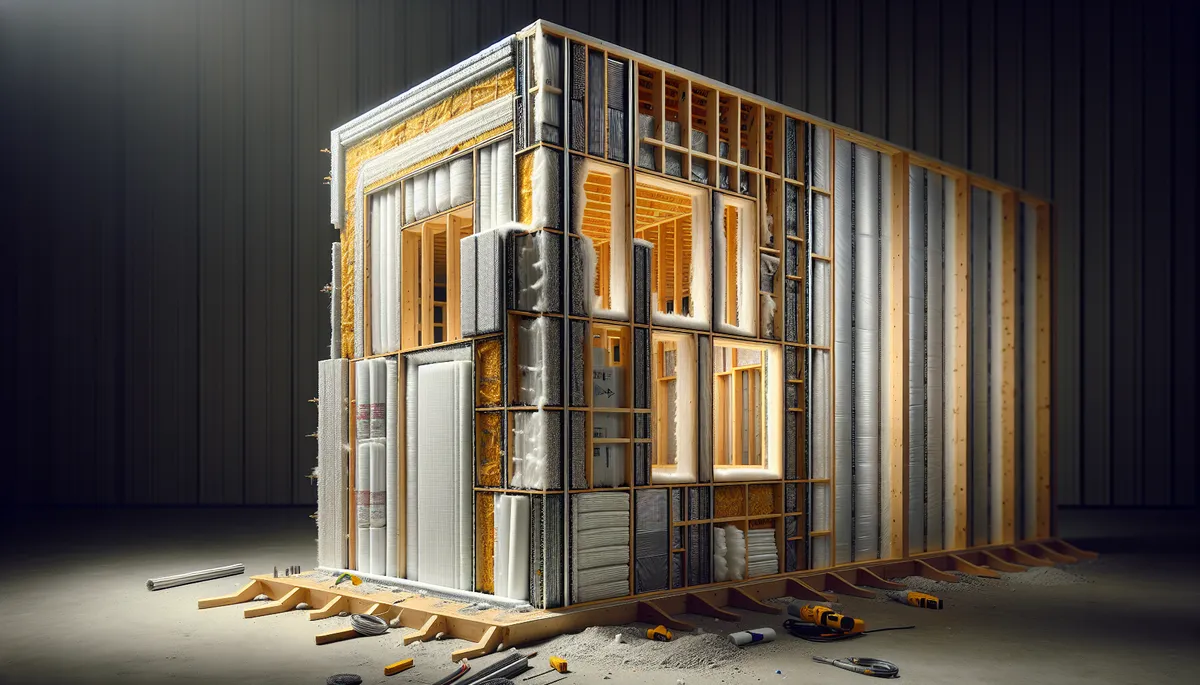
House wrap is commonly used in residential and light commercial construction as part of the exterior wall assembly. While it plays an important role in moisture management, house wrap is often misunderstood as being synonymous with an air barrier. In building science, these two functions are related but distinct. Understanding the difference is essential for proper wall performance, energy efficiency, and moisture control.
What Is a Water-Resistive Barrier (WRB)
A water-resistive barrier is a material installed behind exterior cladding to limit the intrusion of bulk water into the wall assembly. House wraps are designed to shed liquid water while allowing water vapor to pass through the membrane. This balance supports drying while protecting framing and sheathing from rain penetration.
House wraps qualify as WRBs when installed in accordance with code requirements and manufacturer guidelines. Their primary function is water management, not air control.
What Is a Continuous Air Barrier
An air barrier is a system of materials designed to control unintended air movement through the building enclosure. Air leakage can transport moisture, reduce thermal performance, and increase energy consumption. Unlike WRBs, air barriers must be continuous across all six sides of the building enclosure, including walls, roofs, foundations, and transitions between assemblies.
Air barrier performance depends on continuity, sealing, and integration, not solely on the membrane material itself.
Why Housewrap Is Not Automatically an Air Barrier
House wrap alone does not function as a continuous air barrier unless it is detailed and installed to do so. Seams between sheets, fastener penetrations, window and door openings, and transitions to other assemblies all represent potential air leakage paths.
Without taping, sealing, and compatible transition materials, air can bypass the membrane even if the house wrap itself has low air permeability. In practice, air leakage control depends more on installation detailing than on the inherent properties of the house wrap material.
The Role of Installation Detailing
For house wrap to contribute meaningfully to air control, it must be integrated into a broader air barrier strategy. This typically includes taped seams, sealed fasteners where required, properly detailed window and door openings, and continuous transitions to roof and foundation air control layers.
When these details are not addressed, house wrap may still function effectively as a WRB while providing limited or inconsistent air barrier performance.
Building Science Context
Modern building science treats water control, air control, vapor control, and thermal control as separate but coordinated layers of the building enclosure. While a single material may contribute to more than one function, performance should be evaluated at the system level rather than assuming a material fulfills multiple roles by default.
Recognizing the distinction between WRBs and air barriers helps designers, builders, and inspectors evaluate wall assemblies based on real performance rather than product assumptions.
Summary
Housewrap functions primarily as a water-resistive barrier and plays a key role in protecting wall assemblies from bulk water intrusion while supporting vapor diffusion. It does not automatically act as a continuous air barrier unless seams, penetrations, and transitions are properly sealed as part of a coordinated air control strategy.
In practice, builders and designers evaluating enclosure performance or exploring options to get custom printed house wrap should distinguish clearly between water control functions and air leakage control, since each requires different detailing and validation methods.
Effective air barrier performance depends on system continuity and installation detailing rather than on the membrane material alone. Understanding this distinction is essential for designing durable, energy-efficient building enclosures that perform as intended over time.
Related Resources
Frequently Asked Questions
What is the difference between housewrap and an air barrier?
Housewrap functions primarily as a water-resistive barrier (WRB) that sheds liquid water while allowing vapor to pass through. An air barrier is a system of materials designed to control unintended air movement through the building enclosure. While related, these are distinct functions that require different installation details and performance criteria.
Can housewrap function as an air barrier?
Housewrap alone does not automatically function as a continuous air barrier unless it is detailed and installed specifically for air control. This requires taping seams, sealing fastener penetrations, properly detailing window and door openings, and ensuring continuous transitions to other building assemblies. Without these details, housewrap may function as a WRB while providing limited air barrier performance.
What is a water-resistive barrier (WRB)?
A water-resistive barrier is a material installed behind exterior cladding to limit bulk water intrusion into the wall assembly. Housewraps are designed to shed liquid water while allowing water vapor to pass through, protecting framing and sheathing from rain penetration while supporting drying.
Why is proper installation detailing important for air barriers?
Air barrier performance depends on system continuity and installation detailing rather than the membrane material alone. Seams, fastener penetrations, and transitions between assemblies all represent potential air leakage paths. Air leakage control depends more on proper installation detailing than on the inherent properties of the housewrap material itself.
What are the main functions of a building enclosure system?
Modern building science treats water control, air control, vapor control, and thermal control as separate but coordinated layers of the building enclosure. While a single material may contribute to more than one function, performance should be evaluated at the system level rather than assuming a material fulfills multiple roles by default.
