

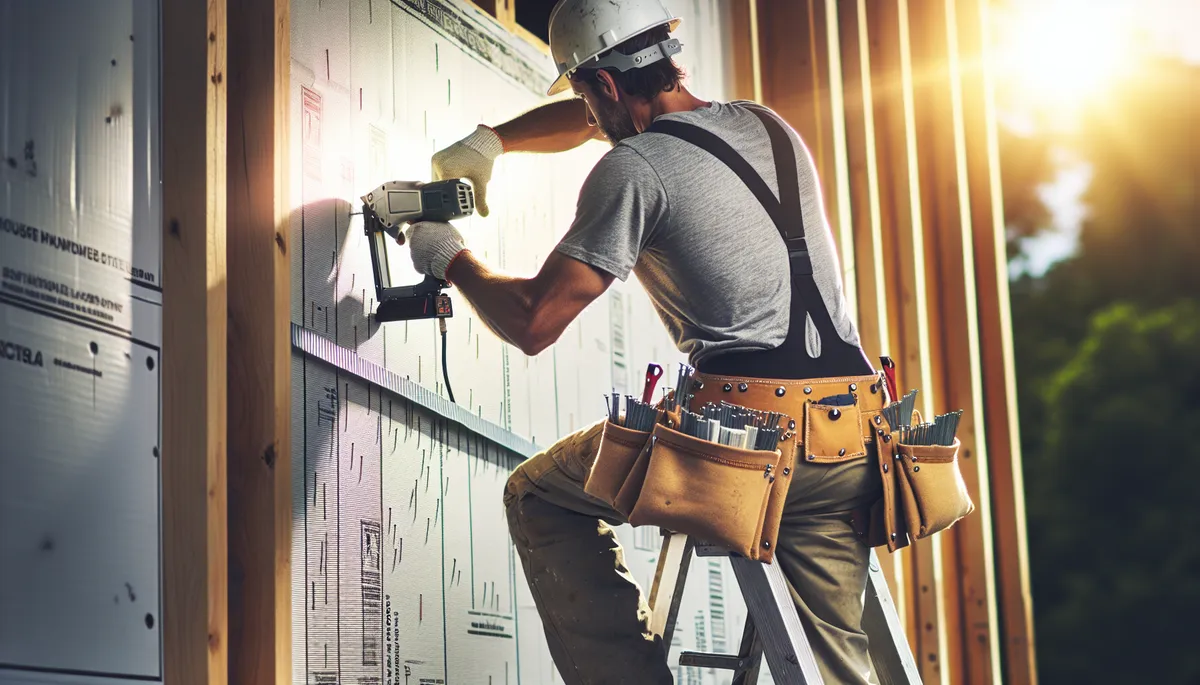
Proper house wrap installation is one of the most critical steps in creating a durable, energy-efficient building envelope. Whether you’re a seasoned contractor or a builder looking to refine your installation techniques, this comprehensive guide covers everything you need to know about installing house wrap correctly the first time.
Why Proper House Wrap Installation Matters
House wrap serves as your building’s secondary weather barrier, protecting the structure from water intrusion while allowing water vapor to escape. When installed correctly, custom house wrap can significantly improve a home’s energy efficiency, prevent mold growth, and extend the life of your siding and sheathing.
Poor installation, however, can lead to moisture problems, reduced R-values, and costly callbacks. Understanding the difference between house wrap vs air barriers is essential before beginning any installation project.
Essential Tools and Materials for House Wrap Installation
Having the right tools on hand will make your installation faster and more professional. Here’s what you’ll need:
Required Tools
- Utility knife or house wrap cutter – For clean, precise cuts
- Hammer tacker or pneumatic cap stapler – Cap nails or staples provide better holding power than standard fasteners
- Tape measure – Essential for maintaining proper overlap measurements
- Chalk line – Keeps your installation straight and level
- Ladder or scaffolding – Safe access to upper wall sections
- House wrap tape – Specifically designed for sealing seams and penetrations
- Scissors or shears – For detailed cuts around windows and doors
Materials Checklist
- House wrap rolls (calculate square footage plus 15% for overlap and waste)
- Cap staples or cap nails (plastic caps prevent tearing)
- House wrap tape (NOT regular construction tape)
- Flashing tape for windows and doors
- Adhesive-backed flashing strips
Step-by-Step House Wrap Installation Process
Following a systematic approach ensures complete coverage and proper overlap at all seams. Here’s the professional method for house wrap installation.
Step 1: Prepare the Wall Surface
Before rolling out any house wrap, inspect your sheathing for protruding nails, screws, or rough edges that could tear the material. All wall sheathing should be properly fastened and flush. Remove any debris, and ensure the surface is dry.
If you’re working on a remodel, verify that all old house wrap and building paper has been removed. Check that all window and door openings are properly framed and that you understand your flashing sequence – this integration is critical for water management.
Step 2: Start at the Bottom Corner
Begin installation at the bottom corner of a wall, typically at the lowest point of your sheathing. This ensures proper water drainage – each upper layer will overlap the layer below, creating a shingling effect that directs water down and away from the building.
Unroll the house wrap horizontally, keeping the bottom edge aligned. Leave approximately 6-12 inches of overlap below the bottom plate if you’re wrapping over the foundation or ledger board. This extra material will later integrate with your drainage plane.
Step 3: Maintain Proper Tension
Keep the house wrap taut but not stretched. Over-tensioning can cause tears when the material contracts in cold weather, while loose, saggy house wrap looks unprofessional and may not perform as intended. The material should lay flat against the sheathing without waves or wrinkles.
Secure the top edge first with cap staples spaced 12-16 inches apart. Then fasten through the field of the material at 12-16 inches both horizontally and vertically. Some manufacturers specify different fastening patterns, so always check your specific product’s installation instructions.
Step 4: Follow Proper Overlap Requirements
This is where many installations fail. Proper overlap is non-negotiable:
- Horizontal seams: Upper layer must overlap lower layer by at least 6 inches (some manufacturers require 12 inches)
- Vertical seams: Minimum 6-inch overlap, with the overlap occurring over a stud when possible
- Inside corners: Wrap around the corner at least 12 inches
- Outside corners: Wrap around the corner at least 12 inches
All horizontal seams should be taped with house wrap tape. Many contractors skip this step, but it’s essential for maintaining the water-resistive barrier. Vertical seams should also be taped, especially in high-wind or high-moisture environments.
Step 5: Cut Openings for Windows and Doors
Never pre-cut window and door openings. Instead, apply house wrap continuously over these areas, then make careful cuts afterward. Here’s the correct sequence:
1. Install house wrap over the entire window or door opening
2. Feel for the corners of the opening
3. Make a diagonal cut from corner to corner, creating an “X”
4. Fold the triangular flaps into the opening
5. Staple the flaps to the interior framing
6. Trim excess material, leaving about 1 inch wrapped inside
This creates a positive drainage plane where water running down the exterior house wrap is directed around the opening rather than into it.
Step 6: Integrate Window and Door Flashing
Proper flashing integration is critical and must follow a specific sequence to maintain water-shedding integrity. The general rule: flashing layers should also shingle, with upper layers overlapping lower layers.
Correct flashing sequence:
- Install sill flashing first (bottom of opening)
- Install side flashing next (overlapping sill flashing)
- Install head flashing last (overlapping side flashing)
- Install a head flap of house wrap over the top flashing
This integration ensures that water entering at any point above the window will be directed out and down, never into the wall cavity. Understanding proper flashing integration helps you avoid many common house wrap installation mistakes.
Step 7: Handle Penetrations Properly
Every penetration – electrical outlets, plumbing vents, HVAC lines, light fixtures – must be properly sealed. For round penetrations like pipes:
- Cut a hole slightly smaller than the penetration
- Slip the house wrap over the pipe
- Apply house wrap tape in a shingle pattern around the penetration
- Consider using pre-formed boot flashings for larger penetrations
For rectangular penetrations like electrical boxes, cut an “X” and fold the flaps around the box, then tape all edges.
Step 8: Seal All Seams and Fasteners
Professional installations include taping all horizontal seams, vertical seams in weather-exposed areas, and any tears or fastener penetrations that compromise the material. Use house wrap tape specifically designed for this purpose – it’s formulated to bond with the house wrap material and withstand UV exposure.
When applying tape, press firmly to ensure good adhesion, especially in cold weather when adhesives are less effective.
Understanding Different House Wrap Products
Not all house wraps are created equal. When selecting materials, consider the differences between custom vs standard house wrap. Custom house wraps often offer superior tear resistance, better UV stability, and enhanced breathability compared to commodity products.
Higher-quality materials may cost more upfront but often install faster due to better handling characteristics and can provide better long-term performance, reducing callbacks and warranty issues.
Common House Wrap Installation Mistakes to Avoid
Even experienced crews make these errors. Here’s what to watch for:
Insufficient Overlap
Skimping on overlap to save material costs pennies but can create significant problems. Water will find any gap in your weather barrier. Always maintain minimum 6-inch overlaps, and increase to 12 inches in high-exposure areas.
Installing Upside Down
Most house wraps have printing that indicates which side faces out. Installing it backward can reduce performance and void manufacturer warranties. Always check product orientation before fastening.
Using Wrong Fasteners
Standard staples can tear through house wrap, especially in windy conditions. Always use cap staples or cap nails with 1-inch plastic or metal caps that distribute pressure and prevent tear-through.
Leaving House Wrap Exposed
Most house wraps are designed for temporary UV exposure only – typically 30 to 180 days depending on the product. Prolonged exposure degrades the material. Install siding as soon as practically possible after house wrap installation.
Poor Integration with Other Systems
House wrap must integrate properly with foundation waterproofing, window/door flashing, and roof underlayment. Speaking of which, proper integration with roofing underlayment at the wall-to-roof transition is critical for overall building envelope performance.
House Wrap Installation Cost Factors
Understanding installation costs helps with accurate bidding and project planning. Several factors influence the total cost:
Material Costs
House wrap itself typically ranges from $0.10 to $0.50 per square foot depending on quality and performance features. Budget products may save money initially but often tear more easily and require more repair during installation.
Labor Costs
Professional installation labor generally runs $0.50 to $1.50 per square foot. Complex architecture with many corners, windows, and penetrations increases labor time. A simple rectangular house installs much faster than a home with multiple gables, dormers, and architectural details.
Fasteners and Tape
Cap staples or nails add approximately $0.05-$0.10 per square foot. Quality house wrap tape costs $8-$15 per roll. Don’t skimp here – proper taping is essential for performance.
Project Complexity
Two-story installations require scaffolding or lifts, increasing costs. Remodels where existing siding must be removed and reinstalled add significant labor. Weather delays in cold or wet seasons can also impact project timelines and costs.
Total Installed Cost
For a typical 2,000 square foot home, expect total installed costs (materials and labor) to range from $1,500 to $4,000. Higher-end custom products with meticulous installation will fall at the upper end of this range but provide better long-term performance.
Working with Weather Conditions
Temperature and moisture affect installation quality. House wrap installs best in temperatures between 40°F and 90°F. Cold weather makes materials brittle and tape adhesives less effective. Very hot weather can make materials too pliable and difficult to keep taut.
Never install house wrap on wet sheathing – trapped moisture can lead to mold and rot. If rain interrupts your installation, ensure all seams and penetrations are temporarily sealed to prevent water intrusion.
Quality Control and Inspection
Before siding installation begins, conduct a thorough inspection:
- Verify all seams have proper overlap and are taped
- Check that all window and door flashing is properly sequenced
- Confirm all penetrations are sealed
- Look for tears or damage and repair with tape or patches
- Ensure bottom edge is properly integrated with foundation flashing
- Verify proper integration at roof line
Taking photos of completed installations before siding installation provides documentation for inspectors and protection against future liability claims.
Get Expert Support for Your Next Project
Proper house wrap installation requires attention to detail and understanding of building science principles. If you have questions about product selection, installation techniques, or need custom solutions for complex projects, contact our team for expert guidance.
Before you start, use our house wrap calculator to determine exactly how many rolls you need.
Frequently Asked Questions
What is the correct way to overlap house wrap?
House wrap should be installed horizontally starting from the bottom of the wall, with each upper layer overlapping the lower layer by at least 6 inches (12 inches is better). This creates a shingling effect that directs water downward. Vertical seams should overlap by at least 6 inches, preferably over a stud. All seams should be taped with house wrap tape.
Can I install house wrap vertically instead of horizontally?
While horizontal installation is preferred because it naturally shingles water downward, vertical installation is acceptable in some situations, particularly on walls with many horizontal breaks. If installing vertically, ensure all seams overlap correctly (with the outer layer facing the direction of prevailing winds) and tape all seams thoroughly.
How long can house wrap be left exposed before installing siding?
Most house wraps are rated for 30 to 180 days of UV exposure, depending on the product. Check your specific manufacturer’s specifications. Extended UV exposure degrades the material, reducing its water resistance and tear strength. Install siding as soon as possible after house wrap installation.
Do I need to tape all house wrap seams?
At minimum, all horizontal seams should be taped because they’re most vulnerable to water intrusion. Vertical seams should be taped in high-wind or high-moisture environments. Taping all seams is best practice and provides the most complete weather barrier. Always tape any tears, penetrations, or fastener areas that compromise the material.
What’s the difference between house wrap and Tyvek?
Tyvek is a brand name of house wrap made by DuPont, while “house wrap” is the general product category. Multiple manufacturers produce house wraps with varying characteristics like tear resistance, breathability, and UV stability. The term “Tyvek” has become somewhat generic (like Kleenex for tissues), but different house wrap products have different performance characteristics worth evaluating.
