

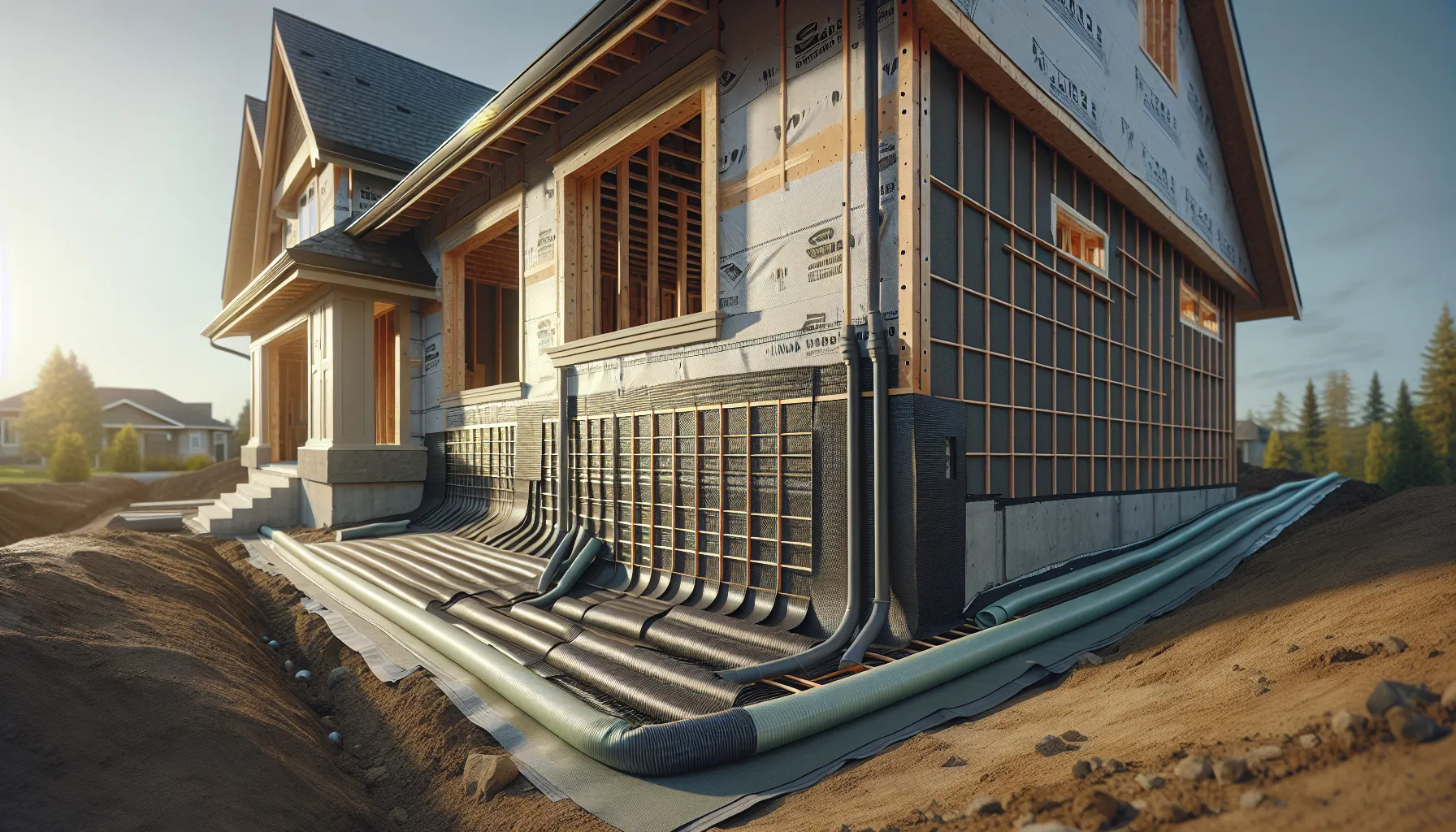
House Wrap for Stucco: The Complete Contractor’s Guide
Stucco is one of the most demanding claddings for WRB performance. It’s applied wet, traps water against the barrier during curing, creates alkaline exposure that degrades some synthetics, and requires extended drainage capacity to manage bulk water intrusion. The “standard house wrap” that works fine under vinyl siding will fail catastrophically under stucco — leading to rot, mold, and structural damage that shows up years after construction.
This guide consolidates everything contractors and spec writers need to know about selecting, specifying, and installing house wrap for stucco applications.
Why Stucco Demands Specialized House Wrap
Traditional house wraps designed for other siding types often fail under stucco because they aren’t engineered to handle the specific demands of cement-based cladding. Stucco creates five primary challenges that other claddings don’t:
1. Prolonged Wetness During Application
Stucco is a wet-applied cladding. The scratch coat, brown coat, and finish coat all involve water-saturated cement mixtures applied directly over the WRB and lath. The WRB remains wet for days or weeks during curing — testing the hydrostatic resistance of the membrane far beyond what rain exposure alone would require.
2. Alkaline Environment
Portland cement stucco has a pH of approximately 12–13, making it highly alkaline. Some synthetic house wraps degrade or lose water resistance when exposed to alkaline conditions over time. Polyolefin wraps are generally resistant, but some woven products may degrade if not specifically formulated for alkaline resistance. Asphalt-saturated felts (Grade D paper) are inherently alkaline-resistant, which is why they’ve been the stucco industry standard for decades.
3. Drainage Requirements
Stucco is a reservoir cladding — it absorbs water during rain and slowly releases it. Bulk water that penetrates cracks must drain down the back of the cladding and exit at weep screeds. A WRB without drainage features traps water against the sheathing, leading to rot. Understanding how water resistance works in house wrap is critical here — stucco demands drainage, not just water holdout.
4. Bond-Breaker Function
The WRB must prevent stucco from bonding directly to the sheathing. If stucco adheres to the OSB or plywood, differential movement (thermal expansion, moisture swelling) causes stress cracking. The WRB acts as a slip plane, allowing the stucco and sheathing to move independently.
5. UV Exposure During Installation
Stucco installation is a multi-week process. The WRB may be exposed to sun, rain, and wind for 4–8 weeks before the finish coat covers it. Low-UV-stability wraps degrade before the stucco even goes on.
Two-Layer Drainage Plane Requirements
Building codes in many jurisdictions now require two layers of weather-resistant barrier behind stucco — a requirement born from widespread moisture failures in single-layer assemblies.
How Two-Layer Systems Work
Bottom layer (first layer applied to sheathing):
- Primary water-resistive barrier
- Absorbs some water, slowing inward migration
- Alkaline-resistant (asphalt-saturated felt)
- Acts as bond-breaker between sheathing and stucco
Top layer (second layer over the first):
- Redundant WRB if the bottom layer is compromised
- Creates a small drainage gap (paper thickness plus wrinkles/laps) for water to move downward
- Further isolates the sheathing from alkaline contact
Lath installation:
- Metal lath (3.4 lb diamond mesh or similar) fastened over both layers
- Fasteners penetrate both layers and anchor into studs
- Lath holds the stucco and provides some standoff from the WRB
Why Two Layers Instead of One?
Testing and field experience show that two layers provide:
- Redundancy: If one layer fails or is damaged during lath installation, the second provides backup
- Better drainage: Water that penetrates the outer layer can drain down the interface between layers instead of being trapped against sheathing
- Improved bond-breaker performance: Two layers of felt are more forgiving of differential movement than a single thin layer
Code Requirements
IRC Section R703.7.3 and IBC Section 2510.6 specify WRB requirements for stucco:
- Minimum: One layer of Grade D paper (ASTM D226 Type I) or equivalent WRB
- Recommended: Two layers of Grade D paper in most climates
- Local amendments: Some jurisdictions (California, Florida, coastal areas) mandate two layers by code
Always check local amendments. In high-wind or high-rainfall zones, two layers are often non-negotiable. For the full picture on WRB code compliance, see our weather-resistant barrier requirements guide.
Single-Layer Synthetic WRB for Stucco: When It Works
Modern synthetic WRBs have been engineered to replace two-layer felt systems with a single product. But not all synthetics are suitable for stucco.
Requirements for Synthetic WRB Under Stucco
- Alkaline resistance: Must resist degradation from Portland cement pH (test data per ASTM C1185 or manufacturer’s alkali exposure testing)
- High hydrostatic resistance: ≥100 cm H₂O (AATCC 127) to handle prolonged wetness
- Drainage features: Textured surface, channeled back, or wrinkled structure to create drainage gaps
- Bond-breaker coating: Surface treatment that prevents stucco adhesion
- UV stability: ≥6 months exposure rating (ASTM G155 or equivalent)
Drainage Wrap Options
Textured/embossed surface wraps: Products with a raised pattern on the surface create ~1mm drainage channels when compressed by lath. Water can move down these channels even when the stucco is tight against the wrap.
Gap drainage wraps: Products with a woven or mesh spacer fabric bonded to the WRB create a 1–3mm drainage gap. Higher drainage efficiency but also higher cost.
Crinkled/textured felt alternatives: Non-woven synthetic felts with a wrinkled surface mimic the drainage behavior of two-layer felt in a single product.
When to Use Synthetic vs. Two-Layer Felt
| Climate / Condition | Recommended WRB |
|---|---|
| High-rainfall coastal (Pacific NW, Southeast) | Two-layer Grade D paper (proven in extreme wet) |
| Moderate rainfall, moderate wind | Single synthetic with drainage features + alkaline resistance |
| Arid/dry climate (Southwest desert) | Single synthetic or single Grade D acceptable |
| Cold climate with freeze-thaw | Two-layer Grade D (handles moisture cycling better) |
| Budget-driven production builds | Two-layer Grade D (lowest cost, familiar to crews) |
| High-performance / warranty-driven projects | Premium synthetic with documented alkaline and drainage testing |
Drainage Efficiency: Testing and Performance
Drainage efficiency is the WRB’s ability to move bulk water downward and out of the wall assembly. Stucco creates two drainage challenges that other claddings don’t.
Initial Application Water
During stucco application, water from the wet cement mix saturates the lath and contacts the WRB. Gravity pulls this water downward. A WRB without drainage features (smooth, flat surface) traps water at horizontal laps and fastener penetrations. Over time, this trapped water migrates inward through fastener holes or saturates the sheathing.
Long-Term Rain Intrusion
Stucco cracks. Hairline cracks from shrinkage, thermal cycling, and settling are inevitable. Rain drives through these cracks and contacts the WRB. The drainage system must evacuate this water before it causes rot.
ASTM E2556 Testing
ASTM E2556 is the standard test method for determining drainage efficiency of exterior insulation and finish systems (EIFS) and stucco cladding. This test measures how effectively water drains behind the cladding when introduced at the top of the wall assembly. Key metrics evaluated:
- Water resistance: Material must resist water penetration under hydrostatic pressure simulating wind-driven rain
- Vapor permeability: Barrier should allow water vapor to pass through, preventing moisture accumulation. Most stucco WRBs target 5–50 perms. For more on this, see our guide on house wrap perm ratings.
- Tensile strength and tear resistance: Material must withstand installation stresses
- UV resistance: WRB should resist degradation for several months of exposure
Products with drainage efficiency ratings above 75% are considered good performers for stucco. Some specialized products achieve 90%+. Look for drainage capacity >0.1 L/min/m — anything lower struggles under heavy rain.
Field indicators of poor drainage:
- Wet sheathing visible during wall cavity inspections
- Mold or staining on back of OSB/plywood
- Fastener corrosion (moisture trapped at penetrations)
- Swelling or delamination of sheathing
Bond Breaker Requirements
When stucco bonds directly to the substrate, differential movement between materials causes cracking, and water that penetrates has no escape path. The WRB must prevent this adhesion.
What Makes a Good Bond-Breaker?
- Asphalt-saturated felt: The asphalt surface is naturally non-bonding
- Coated synthetics: Proprietary coatings (silicone, polymer treatments) that repel cement adhesion
- Textured surfaces: Raised patterns reduce surface contact area, limiting bond potential
- Flexibility: Must accommodate differential movement without tearing
Some manufacturers conduct adhesion testing where stucco is applied over the WRB, cured, and pull-tested. Look for products with bond strength <50 psi, indicating minimal adhesion.
In two-layer systems, the outer layer typically serves as the bond breaker. The inner layer handles weatherproofing with careful flashing integration, while the outer layer prioritizes drainage and bond breaking.
Drainage Mat Options
Drainage mats have become the gold standard for stucco wall assemblies. These products create a defined drainage gap regardless of mortar bond:
Woven Fiber Mats
Random-pattern fiber matrices that maintain drainage channels. Integrate well with traditional lath systems. Good all-around choice for standard stucco assemblies.
Dimpled Membranes
Plastic sheets with raised dimples creating consistent gap spacing (typically 1–6mm). Provide the most consistent gap dimensions and highest drainage efficiency. Best for high-performance assemblies and premium projects.
Entangled Filament Mats
3D filament structures that resist compression under stucco weight. Excellent long-term performance as the filament structure doesn’t flatten over time. Higher cost but maximum drainage capacity.
Each type adds cost and installation time, but for challenging climates or premium projects, the moisture management benefit far outweighs the investment. The cost of drainage mat installation is negligible compared to the cost of a stucco moisture failure remediation.
Installation Over Foam Sheathing
Many modern wall assemblies incorporate rigid foam insulation as exterior continuous insulation. Installing stucco over foam introduces additional considerations:
Fastening Methods
Long fasteners must penetrate through the foam and into structural framing with adequate embedment. Most codes require staples or nails to penetrate studs by at least 3/4 inch. For foam thicker than 1 inch, mechanical attachment becomes challenging — contractors may need vertical furring strips over the foam to provide a nailing base for lath.
Drainage Plane Location
When applying stucco over foam, the drainage plane must be located on the exterior side of the foam layer. Install the WRB directly over the foam surface, ensuring any water that penetrates the stucco can drain before reaching the structural sheathing. The WRB can serve as both the drainage plane and the air barrier in this configuration.
Vapor Permeability
Assemblies with exterior foam insulation require careful vapor permeability analysis. If using closed-cell foam (low permeability), the interior side of the wall may need a vapor-permeable approach to prevent trapping moisture within the assembly. Understanding the difference between house wrap and vapor barriers is essential when designing these assemblies.
Climate-Specific WRB Selection Guide
Hot-Humid Climates (Zones 1–2)
Challenges: High rainfall, wind-driven rain, prolonged wetness, slow drying, alkaline exposure exacerbated by heat.
Recommended WRB: Two-layer Grade D paper (proven in Florida and Gulf Coast) or premium synthetic with high perm rating (20–40 perms) to allow outward drying, drainage features, and documented alkali resistance.
Special considerations:
- Add weep screeds at every floor line and above all openings
- Use corrosion-resistant lath and fasteners (stainless or galvanized)
- Consider a rainscreen gap (1/4″ to 3/4″ furring) for maximum drainage and drying
Cold Climates (Zones 5–8)
Challenges: Freeze-thaw cycling (trapped water freezes, expands, causes delamination), prolonged wet periods in spring/fall, outward vapor drive in winter.
Recommended WRB: Two-layer Grade D paper (handles freeze-thaw well, vapor-open for outward drying) or synthetic with high vapor permeability (40–60 perms) and drainage features.
Special considerations:
- Ensure flashing and weep screeds remain clear of ice buildup
- Use high-quality lath attachment to prevent ice-jacking
Arid Climates (Zone 3B, Southwest Desert)
Challenges: Minimal rainfall but intense UV exposure, extreme heat (120°F+ surface temps), alkaline exposure without moisture-driven dilution.
Recommended WRB: Single-layer synthetic with high UV stability (12+ months) and alkaline resistance. Single-layer Grade D acceptable for lowest cost.
Special considerations:
- Drainage is less critical but still recommended (monsoon rains can be intense)
- UV-resistant lath ties and fasteners
Mixed-Humid / Moderate Climates (Zones 3A–4A)
Challenges: Moderate rainfall, seasonal humidity swings, variable vapor drive direction.
Recommended WRB: Single synthetic with drainage features and alkaline resistance, or two-layer Grade D for budget projects.
Special considerations:
- Moderate perm rating (15–30 perms) balances inward and outward drying
- Standard drainage mats adequate — premium options not typically required
Common Failures in Stucco Assemblies
Understanding failure modes helps contractors avoid costly moisture problems. These are the most common reasons stucco walls fail:
- Missing or inadequate drainage plane: Single-layer flat house wrap without drainage capability traps moisture against sheathing
- Improper flashing integration: Poor integration between the WRB and window/door flashings is the #1 failure point. Water tracks behind the stucco and migrates laterally along the WRB
- Insufficient kick-out flashing: Where roofs meet walls, water can be directed behind the stucco and into the wall cavity
- Missing weep screeds: Without a perforated weep screed at the base, water has no exit path and wicks into the foundation
- Bottom-of-wall detail failures: WRB or stucco extending below the weep screed traps water
- Cracked stucco without drainage backup: Settlement, shrinkage, and impact cracks are inevitable — the drainage plane must handle the water that enters
- Penetration sealing failures: Electrical boxes, plumbing, and other openings through the WRB create leak points when not properly flashed
- WRB degradation from alkaline exposure: Using non-alkaline-resistant products leads to premature breakdown — often not apparent for several years
- Caulk failures: Sealant around windows and penetrations deteriorates over time, requiring maintenance
Installation Best Practices
Proper installation is as important as product selection. Follow these practices for stucco WRB assemblies:
- Start with a clean, dry substrate: Ensure wall sheathing is dry, clean, and free of defects before applying the WRB
- Install from bottom up: Shingle all horizontal laps to shed water. Minimum 6″ overlaps — wider (8–12″) preferred for stucco
- Vertical laps: Minimum 6″ overlap, lapped in the direction that sheds water, ideally over studs
- Integrate flashing first: Install window and door flashing before applying the WRB around openings. The sill pan should tie into the WRB at the bottom and sides
- Install drainage mat: Apply drainage mat over the WRB before lath installation
- Proper lath attachment: Secure lath through the assembly into framing without compressing the drainage gap
- Weep screed at base: Install perforated weep screed to allow water to exit at the bottom of every wall
- Use corrosion-resistant fasteners: Fasten at 12–18″ intervals vertically, 24″ horizontally. Avoid over-fastening
- Quality tape at seams: Use manufacturer-approved house wrap tape for all seams and penetrations
For general house wrap installation guidance, see our complete house wrap installation guide. For product selection across all cladding types, see our best house wrap comparison guide.
Frequently Asked Questions
Can I use regular house wrap under stucco?
Standard flat house wraps designed for vinyl or fiber cement siding are not recommended under stucco. Stucco requires WRBs with alkaline resistance, drainage features, and bond-breaker properties that standard wraps lack. Using the wrong product leads to moisture failures that may not appear for years. Always specify products tested and rated for stucco contact.
Do I need two layers of house wrap for stucco?
It depends on your jurisdiction and climate. IRC R703.7.3 requires a minimum of one layer of Grade D paper or equivalent, but many local codes mandate two layers. In high-rainfall, coastal, or cold climates, two-layer systems are strongly recommended regardless of code minimums. Modern single-layer synthetics with drainage features can replace two-layer felt systems when they meet all stucco-specific requirements (alkaline resistance, drainage, bond-breaking).
What’s better for stucco — felt paper or synthetic house wrap?
Two-layer Grade D felt is the proven traditional choice with decades of track record, natural alkaline resistance, and low cost. Premium synthetics with drainage features offer better tear strength, UV stability, and installation speed. In hot-humid and cold climates with freeze-thaw, felt remains the safer bet. In moderate and arid climates, qualified synthetics perform well. Either way, verify alkaline resistance and drainage capability before specifying.
How do I know if my stucco WRB is failing?
Early signs include interior staining or discoloration near exterior walls, musty odors, elevated moisture readings on sheathing during inspections, visible mold on the back side of OSB or plywood, and fastener corrosion at WRB penetrations. By the time these signs appear, damage is often extensive. Prevention through proper product selection and installation is far cheaper than remediation.
