

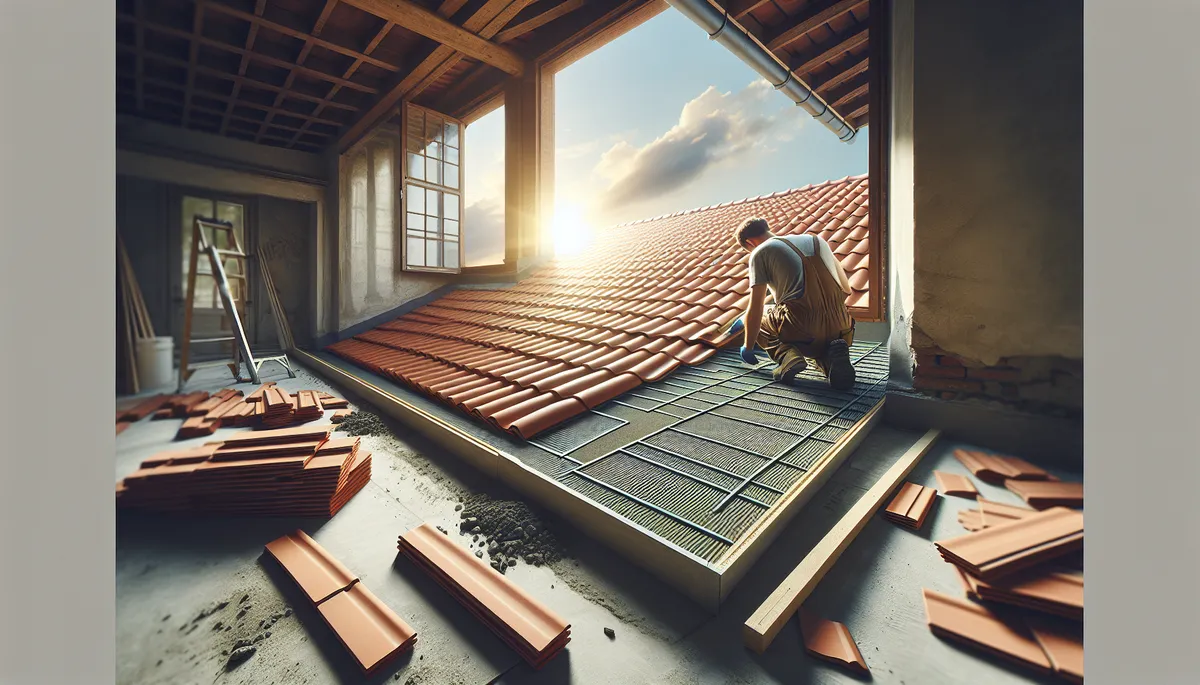
Why Tile Roofs Demand More From Their Underlayment
Tile roofing – whether clay, concrete, or composite – is one of the most durable roofing systems available. With a lifespan that regularly exceeds 50 years and sometimes pushes past 75, tile is a long-term investment. But that longevity creates a problem most contractors already know: the underlayment beneath the tile needs to last just as long.
Standard 15-lb or 30-lb felt underlayment simply will not hold up under a tile roof. Felt degrades over time, especially when exposed to the extreme heat that builds up beneath tile. Once the underlayment fails, water infiltration begins – and replacing underlayment under tile means removing and reinstalling every tile on the roof. That is an expensive callback no contractor wants to face.
Tile roofs place unique demands on underlayment for three key reasons: weight, heat, and expected service life. A concrete tile roof can weigh 900 to 1,100 pounds per square (100 square feet), which means the underlayment is under constant mechanical stress. Clay tiles are slightly lighter but still significantly heavier than asphalt shingles. The underlayment must resist compression and tearing under this sustained load.
Heat is the other critical factor. Tile roofs, particularly in southern and southwestern climates, generate surface temperatures that can exceed 170 degrees Fahrenheit. That heat transfers through the tile and directly onto the underlayment. Products not rated for high-temperature exposure will dry out, crack, and lose their waterproofing ability within a few years. When you are choosing the right roofing underlayment, temperature resistance should be at the top of your criteria for any tile application.
Types of Underlayment Suitable for Tile Roofs
Not every underlayment product on the market is appropriate for tile roofing. The products that perform well under tile share several characteristics: high temperature tolerance, superior tear resistance, and long-term durability that matches the tile’s service life. Here are the three primary categories worth considering.
High-Temperature Synthetic Underlayment
Synthetic roofing underlayment engineered for high-temperature applications is one of the best options for tile roofs. These products are typically made from woven or non-woven polypropylene and are specifically designed to withstand sustained exposure to temperatures above 240 degrees Fahrenheit. Unlike felt, synthetic underlayment will not dry out, curl, or become brittle under heat stress.
The materials used in synthetic underlayment give it a significant advantage in tear resistance as well. Under the weight of tile, a synthetic product rated for tile applications will maintain its integrity for decades. Look for products that carry specific tile roof approvals and high-temperature ratings rather than general-purpose synthetic underlayment designed primarily for asphalt shingle installations.
Self-Adhering (Peel-and-Stick) Underlayment
Self-adhering modified bitumen underlayment provides a fully bonded waterproof membrane beneath the tile. This is particularly valuable in regions with wind-driven rain exposure or in low-slope tile applications where water may move laterally beneath the tile. The adhesive bond eliminates the fastener penetrations that come with mechanically attached products, creating a more reliable moisture barrier.
High-quality self-adhering underlayment rated for tile roofs will use a modified bitumen formulation that remains flexible at low temperatures while resisting flow and displacement at high temperatures. Some manufacturers offer granulated-surface self-adhering products specifically for tile applications, which provide better slip resistance during installation and reduce the risk of the tiles sticking to the membrane.
Two-Ply Underlayment Systems
Two-ply underlayment systems have a long track record under tile roofs, particularly in markets like Florida and California where tile roofing is common. A traditional two-ply system uses a base sheet mechanically fastened to the deck, followed by a second layer that is either mechanically attached with offset fasteners or hot-mopped with asphalt. Modern two-ply systems may combine a synthetic base sheet with a self-adhering cap sheet for improved performance and easier installation.
The two-ply approach provides redundancy. If the top layer is compromised – whether from fastener penetration during tile installation or from foot traffic during maintenance – the second layer continues to protect the deck. This redundancy is one reason many building codes in high-wind and hurricane-prone regions require two-ply systems under tile.
Temperature Resistance: The Non-Negotiable Requirement
Temperature resistance deserves its own discussion because it is the single most common point of failure for underlayment beneath tile roofs. When tile absorbs solar radiation throughout the day, the underside of the tile and the air space beneath it become extremely hot. In direct sun on a summer day in Phoenix, Miami, or Southern California, the temperature at the underlayment surface can reach 150 to 180 degrees Fahrenheit consistently.
Organic felt underlayment exposed to these temperatures will lose its volatile oils and become brittle within three to five years. Even fiberglass-reinforced felt products degrade significantly under sustained heat. The result is an underlayment that cracks, splits, and eventually disintegrates – all hidden beneath tile that still looks perfect from the ground.
Any underlayment installed beneath tile should carry a minimum temperature rating of 240 degrees Fahrenheit for sustained exposure. Many premium products designed for tile applications are rated to 260 degrees or higher. This is not a specification to compromise on.
Concrete Tile vs. Clay Tile vs. Composite Tile: Underlayment Considerations
While all tile roofs share the need for high-performance underlayment, there are some differences worth noting based on tile type.
Concrete tile is the heaviest option, typically weighing 9 to 12 pounds per square foot when installed. This weight creates the greatest mechanical stress on the underlayment. Concrete tile also tends to have a rougher bottom surface than clay, which can abrade the underlayment over time as the roof expands and contracts with temperature changes. For concrete tile, a high-tear-strength synthetic or a two-ply system is strongly recommended.
Clay tile is lighter than concrete but conducts and retains heat more effectively. Clay tile roofs tend to produce higher peak temperatures at the underlayment surface. Self-adhering membranes with high-temperature modified bitumen formulations work well under clay tile, as do premium synthetic products with elevated temperature ratings.
Composite (synthetic) tile is the lightest of the three and generates less heat transfer than clay or concrete. However, composite tiles still require underlayment rated for tile applications. The reduced weight means less mechanical stress, but the temperature and longevity requirements remain. Do not downgrade to a shingle-grade underlayment simply because the tile is lighter.
Building Code Requirements for Tile Roofing Underlayment
Building codes establish minimum underlayment requirements for tile roofs, and these requirements are more demanding than those for asphalt shingles. The International Building Code (IBC) and International Residential Code (IRC) both address tile roofing underlayment, and many local jurisdictions add additional requirements.
In general, code requirements for tile underlayment specify:
- Minimum one layer of ASTM D226 Type II (30-lb felt) or equivalent synthetic underlayment for standard tile installations on slopes of 4:12 or greater.
- Two layers of underlayment for tile roofs in high-wind regions or on slopes between 2.5:12 and 4:12.
- Self-adhering membrane at eaves, valleys, and other vulnerable areas in many jurisdictions, regardless of the primary field underlayment.
Florida Building Code (FBC) is particularly prescriptive, requiring either a self-adhering modified bitumen membrane or a two-ply mechanically attached system beneath tile roofs in the High-Velocity Hurricane Zone (HVHZ). California also has specific requirements tied to fire ratings, often requiring fire-rated underlayment beneath tile in Wildland-Urban Interface (WUI) zones.
Always verify local code requirements before specifying underlayment for a tile project. Code minimums should be treated as exactly that – minimums. Best practice often exceeds code.
Single-Ply vs. Two-Ply Underlayment Systems for Tile
The choice between a single-ply and two-ply system depends on several factors: local code requirements, roof slope, wind exposure, and the project budget.
Single-ply systems use one layer of high-performance underlayment – typically a premium synthetic or self-adhering membrane. A single-ply approach is faster to install and uses less material, making it cost-effective on projects where code allows it. For a single-ply system to be appropriate under tile, the product must be specifically rated and approved for single-ply tile applications. General-purpose underlayment applied in a single layer does not provide adequate protection.
Two-ply systems provide an additional layer of protection and are required by code in many tile-heavy markets. The additional material and labor cost is offset by the added durability and the reduced risk of water intrusion over the life of the roof. On a roof that will last 50 or more years, the incremental cost of a second layer of underlayment is a wise investment.
For projects in hurricane zones, coastal areas, or regions with heavy rain exposure, a two-ply system is the safer choice regardless of minimum code requirements.
Battens and Counter-Battens Over Underlayment
Most tile roofs use a batten system to elevate the tile above the deck, and the interaction between the batten system and the underlayment is an important design consideration.
Horizontal battens are fastened through the underlayment into the roof deck, creating fastener penetrations that the underlayment must seal around. Self-adhering underlayment provides better fastener-sealing performance than mechanically attached products because the adhesive layer tends to seal around nail shanks. When using a mechanically attached synthetic underlayment, ensure the product has demonstrated good nail-sealability in testing.
Counter-batten systems – which add vertical battens beneath the horizontal battens – create an elevated airspace between the underlayment and the tile. This airspace provides significant benefits: it promotes drainage of any water that penetrates beneath the tile, it improves ventilation at the underlayment surface, and it reduces heat transfer to the underlayment. Counter-batten systems are standard practice in many international markets and are becoming more common in the United States, particularly in hot climates.
The added labor and material cost of a counter-batten system is modest compared to the performance benefits, and contractors working in tile-heavy markets should be familiar with both direct-deck and counter-batten installation methods.
Ventilation Considerations Under Tile Roofs
Ventilation beneath tile roofs is more complex than ventilation under shingle roofs. The natural profile of tile – whether flat, S-shaped, or barrel – creates some air movement between the tile and the underlayment. However, this incidental ventilation is often insufficient to adequately manage heat and moisture.
Proper ventilation reduces heat buildup at the underlayment surface, extends underlayment service life, and can improve the energy performance of the building. Counter-batten systems, as discussed above, are one of the most effective ways to improve under-tile ventilation. Ridge vents designed for tile roofs, combined with adequate intake ventilation at the eaves, complete the ventilation system.
Contractors focused on delivering high-performance roofing systems should also consider the broader energy implications of the roofing assembly. Improved ventilation and heat management under tile roofs contribute to the overall thermal performance of the building envelope – an approach consistent with the growing demand for energy-efficient building products across the construction industry.
Installation Best Practices for Tile Roof Underlayment
Installing underlayment for tile roofs requires attention to details that may not apply to shingle installations. Following best practices reduces the risk of callbacks and ensures the underlayment performs for the full life of the tile.
Deck preparation: The roof deck must be clean, dry, and structurally sound before underlayment installation. Tile roofs are heavy, and any deck deficiencies will worsen over time under the sustained load. Verify that the deck meets structural requirements for the specified tile system.
Overlap requirements: Follow manufacturer specifications for horizontal and vertical overlaps. Most tile underlayment products require minimum 4-inch horizontal overlaps and 6-inch vertical (end) overlaps. In valleys and at transitions, overlaps should be increased to 12 inches or more.
Fastener patterns: Over-driving fasteners is a common issue that compromises underlayment integrity. Use cap nails or button-cap staples as specified by the manufacturer, and do not over-drive them through the underlayment surface. Avoiding underlayment installation mistakes at this stage prevents problems that will be hidden for years under the tile.
Wrinkle management: Underlayment should be installed flat and smooth. Wrinkles create channels where water can travel laterally, and they can telegraph through the batten system and affect tile alignment. Pull the underlayment taut during installation and work from eave to ridge.
Weather exposure limits: Even high-quality underlayment has limits on how long it should be exposed to UV and weather before the tile is installed. Follow manufacturer guidelines for maximum exposure time, and plan the project schedule so the tile installation follows the underlayment installation promptly.
Cost Considerations for Premium Underlayment on Tile Roofs
Premium underlayment for tile roofs costs more than standard felt or basic synthetic products. A high-temperature synthetic underlayment rated for tile may cost $75 to $120 per square, compared to $20 to $40 per square for standard 30-lb felt. Self-adhering membranes run $100 to $200 per square depending on the product. Two-ply systems roughly double the material cost and add 30 to 50 percent more labor time.
These numbers can cause sticker shock, but they need to be evaluated in context. A tile roof represents a significant investment – often $15,000 to $40,000 or more depending on the size and tile type. The underlayment cost represents a small percentage of the total project cost. Saving $500 to $1,000 on underlayment only to face a $10,000 to $20,000 re-roofing job in 15 years when the cheap underlayment fails is not a trade-off that benefits anyone.
When presenting bids to building owners, frame the underlayment as part of the total system cost and emphasize the matched lifespan. Owners investing in a 50-year tile roof expect – and deserve – underlayment that will last 50 years.
For questions about which underlayment products are best suited for your tile roofing projects, contact R-Value Associates. We work with contractors to match the right underlayment to the application, ensuring long-term performance and code compliance.
Frequently Asked Questions
What type of underlayment is best for tile roofs?
High-temperature synthetic underlayment or self-adhering modified bitumen membranes are the best options for tile roofs. These products are engineered to withstand the sustained heat, heavy weight, and long service life associated with tile roofing. Standard felt underlayment degrades too quickly under tile and should be avoided. Look for products with temperature ratings of 240 degrees Fahrenheit or higher and specific approvals for tile roof applications.
Why can’t I use regular felt underlayment under tile?
Regular felt underlayment – whether 15-lb or 30-lb – degrades rapidly under the extreme heat generated by tile roofs. Tile surfaces can exceed 170 degrees Fahrenheit, and that heat transfers to the underlayment. Felt loses its oils, becomes brittle, and cracks within three to five years under tile. Since tile roofs last 50 or more years, using felt means the underlayment will fail long before the tile, requiring an expensive tear-off and reinstallation.
Do building codes require two layers of underlayment under tile roofs?
Building code requirements vary by jurisdiction, roof slope, and wind exposure zone. Many jurisdictions require two-ply underlayment systems for tile roofs in high-wind regions, hurricane zones, or on lower-slope applications between 2.5:12 and 4:12. The Florida Building Code, for example, requires either a self-adhering membrane or a two-ply system in the High-Velocity Hurricane Zone. Always check local code requirements, as they often exceed the minimums in the IRC and IBC.
What is a counter-batten system and should I use one under tile?
A counter-batten system adds vertical battens beneath the horizontal battens that support the tile, creating an elevated air channel between the underlayment and the tile. This air channel improves drainage, promotes ventilation, and reduces heat transfer to the underlayment. Counter-batten systems are standard practice in many international markets and are increasingly used in the United States, especially in hot climates. The modest additional cost is justified by improved underlayment longevity and better thermal performance.
How much does premium tile roof underlayment cost compared to standard products?
High-temperature synthetic underlayment rated for tile typically costs $75 to $120 per square (100 square feet), compared to $20 to $40 per square for standard 30-lb felt. Self-adhering membranes range from $100 to $200 per square. While the upfront cost is higher, the underlayment represents a small percentage of total tile roof project costs. Investing in premium underlayment avoids the expense of tearing off and replacing tiles when inferior underlayment fails prematurely.
For more details, see our guide on complete guide to roof underlayment types.
