

What Is Roof Underlayment and Why Does Every Roof Need It?
Roof underlayment is a water-resistant or waterproof barrier material installed directly onto the roof deck before any roofing material goes on top. It serves as the last line of defense between your building’s interior and the elements – protecting the structure from wind-driven rain, ice dams, and moisture infiltration that can penetrate past shingles, tiles, or metal panels.
Every building code in North America requires roof underlayment for good reason. Even the best roofing materials can fail under extreme weather, and fastener penetrations create potential leak points across every square foot of roof surface. Underlayment catches what the primary roofing material misses, prevents deck rot, and buys critical time if outer materials are damaged during a storm.
For contractors, understanding the different roof underlayment types is not optional – it directly impacts project performance, code compliance, and callback rates. Choosing the wrong underlayment for the application is one of the most common and costly mistakes in roofing.
The 3 Main Types of Roof Underlayment
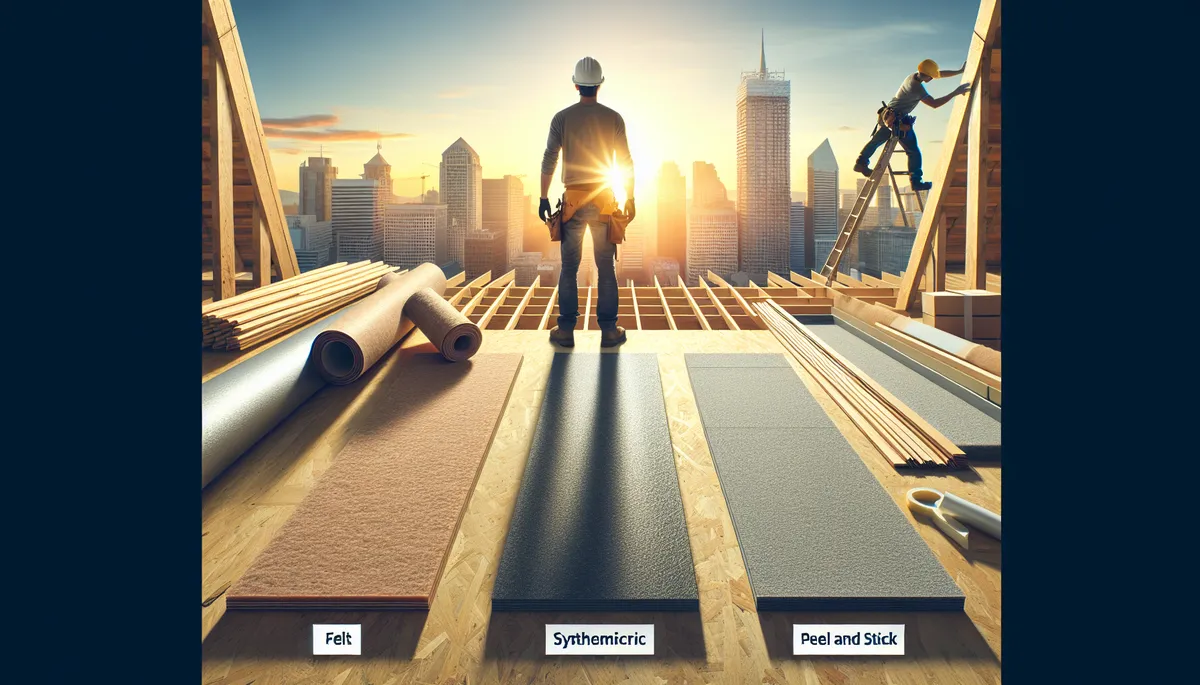
There are three primary roofing underlayment types used in residential and commercial construction today: asphalt-saturated felt, synthetic underlayment, and self-adhering (peel and stick) membrane. Each serves a distinct purpose, and most roofing projects use at least one – sometimes a combination of two. For more details, see our guide on self-adhering peel and stick underlayment.
1. Asphalt-Saturated Felt Underlayment
Asphalt-saturated felt is the traditional roof underlayment that has been used for over a century. Made from a base mat of natural fibers (typically cellulose or fiberglass) saturated with asphalt, felt underlayment provides a basic water-resistant barrier at a low cost.
15-lb vs 30-lb Felt: What’s the Difference?
Felt underlayment comes in two standard weights:
- 15-lb felt (No. 15): Thinner, lighter, and less expensive. Weighs approximately 7-8 lbs per square (100 sq ft) in modern production. Suitable for steep-slope roofs with asphalt shingles where budget is the primary concern. Easier to handle but tears more readily during installation.
- 30-lb felt (No. 30): Roughly twice as thick and significantly more durable. Weighs approximately 14-16 lbs per square. Offers better protection against foot traffic during installation and provides improved water resistance. Required by many shingle manufacturers for warranty compliance on lower-slope applications.
Pros of Felt Underlayment
- Lowest upfront material cost
- Widely available at any building supply
- Familiar to all roofing crews
- Breathable – allows some moisture vapor transmission
Cons of Felt Underlayment
- Tears easily during installation, especially in windy conditions
- Absorbs moisture and can wrinkle when wet
- Limited UV exposure tolerance (typically 30-60 days maximum)
- Heavier rolls make handling more labor-intensive
- Can rot over time if trapped moisture is present
- Shorter lifespan compared to synthetic alternatives
Felt works best on straightforward residential re-roofs with asphalt shingles where the roofing material will be installed quickly after the underlayment goes down. For projects requiring extended weather protection or higher performance, contractors increasingly choose synthetic underlayment over felt.
2. Synthetic Roof Underlayment
Synthetic roofing underlayment has become the industry standard for professional contractors over the past two decades. Made primarily from polypropylene or polyethylene polymers, synthetic underlayment delivers superior performance across nearly every measurable category.
Woven vs Non-Woven Construction
Synthetic underlayment comes in two primary constructions, and understanding the materials in synthetic underlayment matters for selecting the right product:
- Woven synthetic: Constructed from interlocking polypropylene fibers woven together, creating exceptional tear strength and dimensional stability. Woven products tend to lie flatter on the deck and resist wrinkling. They are generally the premium option.
- Non-woven synthetic: Made from layered or spun-bonded polypropylene fibers that are bonded together through heat or chemical processes. Non-woven products are typically lighter weight and more economical while still outperforming traditional felt in most categories.
Advantages of Synthetic Underlayment
- Superior tear strength: Up to 5-10x stronger than 30-lb felt, reducing waste and callbacks
- Lightweight rolls: Cover more area per roll at less weight, improving crew productivity
- Extended UV exposure: Most products are rated for 4-6 months of UV exposure, with some premium products rated up to 12 months
- Moisture resistance: Does not absorb water, will not wrinkle or rot
- Non-slip surface: Textured walking surface improves crew safety on the roof
- Consistent quality: Engineered manufacturing produces uniform thickness and performance
When comparing synthetic vs other underlayment options, the performance gap is significant enough that most roofing manufacturers now recommend or require synthetic underlayment for full warranty coverage.
3. Self-Adhering (Peel and Stick) Underlayment
Self-adhering underlayment – commonly called peel and stick – is a premium waterproof membrane made from rubberized asphalt bonded to a polyethylene or polyester backing. Unlike felt and synthetic underlayment, which are water-resistant, peel and stick creates a fully waterproof, self-sealing barrier that bonds directly to the roof deck.
How It Works
The rubberized asphalt adhesive layer seals around nail and fastener penetrations, creating a watertight bond at every attachment point. This self-sealing property is what makes peel and stick critical in vulnerable roof areas.
Where Building Codes Require Peel and Stick
The IRC (International Residential Code) Section R905 requires self-adhering ice and water shield membrane in specific locations: For more details, see our guide on ice and water shield vs synthetic underlayment.
- Eaves in ice dam zones: In areas where the average January temperature is 25 degrees F or less, an ice barrier must extend from the eave edge to at least 24 inches past the interior wall line
- Valleys: Roof valleys concentrate water flow and are high-risk leak areas
- Around penetrations: Plumbing vents, chimneys, skylights, and other roof penetrations
- Low-slope transitions: Where steep-slope roofing transitions to lower pitches
Most contractors use peel and stick in combination with synthetic underlayment across the rest of the field – peel and stick in the critical areas, synthetic everywhere else. This approach balances waterproof protection where needed with cost efficiency across the full roof area.
Comparison Table: All 3 Roof Underlayment Types
| Specification | Asphalt-Saturated Felt | Synthetic Underlayment | Self-Adhering (Peel & Stick) |
|---|---|---|---|
| Weight per Square | 7-16 lbs | 3-6 lbs | 30-65 lbs |
| Tear Strength (MD) | 5-15 lbs | 25-80 lbs | 15-30 lbs |
| Permeability (Perms) | 5-60 perms | 1-16 perms | 0.05-0.5 perms |
| Cost per Square | $10-$25 | $20-$45 | $75-$175 |
| Lifespan | 15-20 years | 25-50 years | 25-40 years |
| UV Exposure Rating | 30-60 days | 4-12 months | 30-90 days |
| Water Resistance | Water-resistant | Water-resistant | Waterproof |
Which Underlayment Type for Which Roofing Material?
Matching the right underlayment to your roofing material is critical for both performance and warranty compliance. Here is what we recommend based on decades of experience supplying roofing contractors:
Asphalt Shingles
Synthetic underlayment is the standard recommendation for asphalt shingle roofs. It provides the best combination of tear resistance during installation, UV protection if the project gets delayed, and long-term moisture management. Use peel and stick at eaves, valleys, and penetrations per code requirements. While 30-lb felt is still acceptable on steep-slope shingle roofs, the performance difference and labor savings of synthetic make it the better value in nearly every scenario.
Metal Roofing
Synthetic underlayment is strongly recommended for metal roofing installations. Metal panels expand and contract with temperature changes, and the superior tear strength of synthetic underlayment resists damage from panel movement. High-temperature synthetic products are available for metal roofs that may generate heat buildup. Avoid standard felt under metal – it can dry out and become brittle from heat cycling.
Tile Roofing (Clay and Concrete)
Tile roofs demand premium underlayment because the underlayment often serves as the primary waterproofing layer. Tile installations typically use a combination of peel and stick membrane in critical areas with heavy-duty synthetic across the field. Some tile manufacturers require two layers of underlayment for warranty coverage. The extended UV exposure rating of synthetic underlayment is especially important for tile work, since the installation timeline for tile is significantly longer than shingles.
Cedar Shake and Shingle
Cedar shake and shingle roofs require breathable underlayment to allow moisture vapor to escape from both sides of the wood. Synthetic underlayment with adequate vapor permeability is the preferred choice. Some cedar shake installations use a combination of underlayment and cedar breather mat to maintain airflow. Peel and stick should only be used at eaves and valleys – never as full field underlayment under cedar, as it traps moisture and accelerates wood rot.
Building Code Requirements for Roof Underlayment (IRC R905)
The International Residential Code (IRC) Section R905 establishes minimum requirements for roof underlayment across different roofing materials. Contractors must understand these requirements to maintain code compliance:
- IRC R905.1.1 – Underlayment: Requires underlayment for asphalt shingles, metal roofing, clay/concrete tile, wood shingles and shakes, and other steep-slope roofing materials
- IRC R905.2.7 – Asphalt Shingle Underlayment: Specifies ASTM D226 Type I or II (felt) or ASTM D4869 Type I through IV, or synthetic underlayment meeting ASTM D226 equivalent performance
- IRC R905.2.7.1 – Ice Barrier: In areas where the average daily temperature in January is 25 degrees F or less, an ice barrier (self-adhering membrane) must be installed at eaves extending to at least 24 inches past the interior wall line
- IRC R905.7.3 – Wood Shake Underlayment: Requires an interlayment of No. 30 felt between shake courses in addition to standard underlayment
Local jurisdictions may enforce stricter requirements than the IRC minimum. Always verify with the local building authority before specifying underlayment for a project. Many coastal and high-wind zones require enhanced underlayment specifications beyond the baseline code.
Understanding how underlayment interacts with the full building envelope is also important. For related moisture management products, see our guide on house wrap vs vapor barrier systems.
How to Choose the Right Underlayment for Your Project
Selecting the right roof underlayment comes down to five key factors. When choosing the right underlayment for a project, work through each of these considerations:
1. Roofing Material Compatibility
Start with your primary roofing material and check the manufacturer’s underlayment requirements. Many shingle and metal manufacturers now require or recommend synthetic underlayment for full warranty coverage. Using the wrong underlayment can void the material warranty entirely.
2. Roof Slope
Low-slope applications (2:12 to 4:12) demand higher-performance underlayment. Many codes require two layers of underlayment or self-adhering membrane on roofs below 4:12 pitch. Steep-slope roofs (above 4:12) have more flexibility in underlayment selection.
3. Climate and Weather Exposure
Projects in ice dam zones require self-adhering membrane at eaves. High-wind regions benefit from synthetic underlayment with cap-nail fastening patterns. Hot climates should use high-temperature-rated products, especially under metal roofing.
4. Project Timeline
If the roof deck may sit exposed for weeks or months before final roofing installation, synthetic underlayment with extended UV exposure ratings is essential. Felt underlayment deteriorates rapidly under prolonged sun exposure, leaving the deck unprotected.
5. Total Installed Cost
While synthetic underlayment costs more per roll than felt, the installed cost difference narrows significantly when you factor in labor savings. Synthetic covers more area per roll, installs faster, and generates less waste from tearing. When you add the reduced callback risk and longer service life, synthetic delivers better total value on most projects.
Need help selecting the right underlayment product for your next project? Contact R-Value Associates – our team works with contractors every day to match the right building materials to the job requirements.
Frequently Asked Questions About Roof Underlayment Types
What is the best type of roof underlayment?
Synthetic underlayment is the best all-around choice for most roofing applications. It outperforms felt in tear strength, moisture resistance, UV exposure tolerance, and lifespan while reducing installation labor. For critical areas like eaves in ice dam zones, valleys, and penetrations, self-adhering peel and stick membrane provides the highest level of waterproof protection.
Can you use synthetic underlayment under metal roofing?
Yes, synthetic underlayment is the recommended choice for metal roofing installations. Look for products specifically rated for high-temperature applications, as metal roofs can generate significant heat. Avoid standard asphalt-saturated felt under metal panels – the heat cycling can cause felt to dry out, become brittle, and lose its protective properties within a few years.
Is roof underlayment required by building code?
Yes. The International Residential Code (IRC) Section R905 requires underlayment for virtually all steep-slope roofing materials including asphalt shingles, metal, tile, and wood shakes. In cold climates, additional ice barrier membrane is required at eaves. Local codes may impose stricter requirements than the IRC baseline, so always verify with your local building department.
How long can roof underlayment be exposed to weather?
Exposure ratings vary significantly by type. Asphalt-saturated felt should not be exposed for more than 30-60 days. Standard synthetic underlayment is typically rated for 4-6 months of UV exposure, with premium products rated up to 12 months. Self-adhering membrane generally tolerates 30-90 days of exposure. Always check the specific product’s data sheet for the manufacturer’s rated exposure time.
Do I need both synthetic underlayment and peel and stick on the same roof?
In most cases, yes. The standard best practice is to install self-adhering peel and stick membrane in high-risk areas – eaves (especially in ice dam zones), valleys, around penetrations, and at low-slope transitions – then cover the remaining field area with synthetic underlayment. This combination approach gives you waterproof protection where it matters most and cost-effective water resistance across the full roof deck.
For more details, see our guide on best underlayment for metal roofs. For more details, see our guide on underlayment for tile roofs.
