

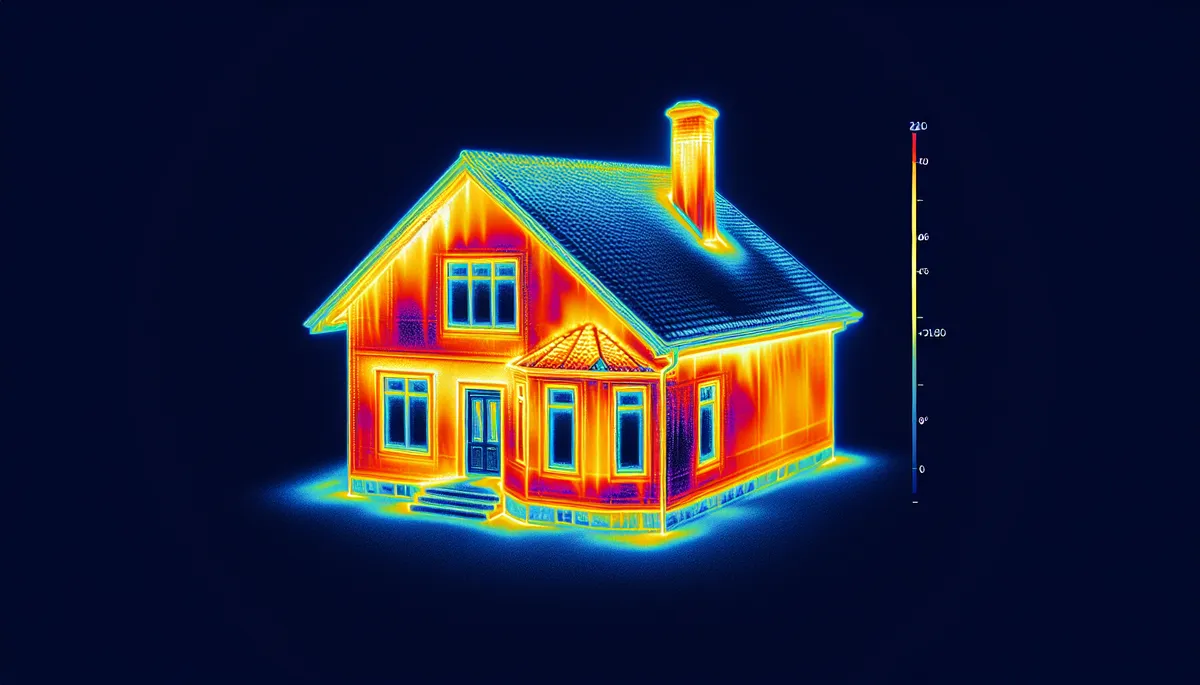
When researching house wrap for your building project, you might wonder about its R-value – and whether that number actually matters. At R-Value Associates, we get this question constantly. The short answer? House wrap does have a minimal R-value, but that’s not why you need it. Understanding what R-value means and how house wrap actually protects your building envelope is crucial for making informed decisions about your construction project.
What Does R-Value Mean?
R-value measures thermal resistance – how well a material resists the flow of heat. The higher the R-value, the better the material insulates. It’s calculated by measuring how much heat moves through a material over time under specific temperature differences.
In construction, R-value is the standard metric for comparing insulation materials. For example, rigid panel insulation R-values typically range from R-3 to R-6 per inch, while spray foam insulation R-values can reach R-6 to R-7 per inch for closed-cell applications.
Building codes often specify minimum R-value requirements for walls, attics, and foundations. This is why R-value gets so much attention – it’s a regulatory benchmark and a straightforward way to compare insulation products.
Does House Wrap Have an R-Value?
Yes, but it’s negligible. Most house wraps have an R-value between 0.5 and 1.0. To put that in perspective:
- Tyvek HomeWrap: R-value approximately 0.5
- DRYline house wrap: R-value approximately 0.6-0.8
- Rex Wrap: R-value approximately 0.5-0.7
- Foam-backed house wraps: R-value up to 3.0 (for specialized products with integrated insulation)
Compare this to wall insulation, which typically ranges from R-13 to R-21 for standard framing. The house wrap’s thermal contribution is essentially a rounding error.
So Why Even Talk About R-Value?
Because it’s the wrong metric to focus on when selecting house wrap. This is a critical point in building science: the primary function of house wrap is not thermal insulation – it’s air and moisture management. Evaluating house wrap solely by R-value is like choosing a car based only on cup holder size.
How House Wrap Actually Reduces Heat Loss
While house wrap doesn’t contribute meaningful thermal resistance through its material properties, it plays a vital role in reducing heat loss through air sealing. This is where the real energy savings happen.
Air Infiltration: The Hidden Energy Thief
Air leakage accounts for 25-40% of heating and cooling costs in typical homes. When cold air infiltrates your building envelope in winter (or hot, humid air in summer), your HVAC system works overtime to compensate. The best insulation in the world can’t perform effectively if air is flowing around it.
This is where properly installed custom house wrap becomes critical. It serves as an air barrier, preventing uncontrolled air movement through the wall assembly.
The Air Barrier Function
Understanding house wrap and air barriers is essential. When house wrap is properly installed with sealed seams and careful detailing around penetrations, it creates a continuous air barrier that:
- Stops wind from washing through insulation (wind-washing reduces insulation effectiveness by 20-50%)
- Prevents conditioned air from escaping through wall cavities
- Maintains consistent pressure differences across the building envelope
- Protects insulation from moisture that degrades thermal performance
A wall with R-20 insulation but poor air sealing can perform worse than a wall with R-15 insulation and excellent air sealing. This is why building codes increasingly emphasize air tightness testing, not just R-value requirements.
R-Value of Tyvek and Other Common House Wraps
Let’s look at specific products and what you actually need to know about them.
Tyvek R-Value
Tyvek HomeWrap, the most recognizable house wrap brand, has an R-value of approximately 0.5. Tyvek’s real value comes from: For more details, see our guide on Typar vs Tyvek house wrap.
- Water resistance: Excellent protection against bulk water infiltration
- Breathability: High vapor permeability (58 perms) allows moisture to escape from wall cavities
- Air resistance: When properly taped, provides effective air barrier performance
- Durability: UV resistance for extended exposure during construction
DRYline vs Tyvek
When comparing DRYline vs Tyvek, both have similar minimal R-values. The differences lie in:
- Drainage plane: DRYline’s textured surface creates better drainage channels
- Installation speed: DRYline’s 10-foot width covers more area faster
- Permeability: Both offer excellent vapor transmission
- Cost-effectiveness: DRYline often provides better value per square foot
Rex Wrap Royal vs Tyvek
The comparison of Rex Wrap Royal vs Tyvek shows similar R-value negligibility, with differences in:
- Material composition: Different polymer structures affecting durability
- Tear resistance: Variations in mechanical strength
- Regional availability: Distribution networks affect accessibility and cost
Why Permeability Matters More Than R-Value
Here’s the counterintuitive truth about house wrap: you want it to let moisture through. This vapor permeability – measured in perms – is far more important than R-value.
The Moisture Problem
Modern buildings are complex moisture environments. Water vapor moves from high concentration to low concentration, and in most climates, moisture wants to move outward through walls during heating season. If that moisture gets trapped in wall cavities, you get:
- Mold growth on framing and sheathing
- Wood rot and structural degradation
- Reduced insulation performance (wet insulation loses R-value)
- Paint failure and exterior damage
The Right Balance
Effective house wrap must be:
- Water-resistant: Stops liquid water from rain and snow
- Vapor-permeable: Allows water vapor to escape (typically 10+ perms)
- Air-tight: When properly sealed, prevents air infiltration
This is why a high-R-value material like plastic sheeting or foam board (without proper detailing) makes terrible house wrap – it traps moisture. The ideal house wrap breathes outward while protecting against liquid water and air infiltration.
How House Wrap Works With Insulation
Think of your wall assembly as a system, not individual components. House wrap and insulation work together, each performing specific functions:
The Complete Wall Assembly
From exterior to interior:
- Siding/cladding: First line of weather protection
- Air gap/drainage plane: Allows water to drain and air to dry
- House wrap: Water barrier, air barrier, vapor permeable
- Sheathing: Structural component, additional air sealing
- Insulation: Thermal resistance (the R-value layer)
- Interior air/vapor barrier: Controls interior moisture and air
- Drywall: Interior finish
Why You Need Both
Insulation without house wrap is vulnerable to:
- Wind-washing that reduces effective R-value
- Moisture infiltration that degrades performance
- Air convection loops that bypass thermal resistance
House wrap without adequate insulation is pointless – you’ve controlled air and moisture but done nothing about conductive heat loss.
Installation Quality Matters
The best house wrap with the worst installation is worse than mediocre house wrap properly installed. Critical details include:
- Overlapping horizontal seams shingle-style (upper over lower)
- Sealing all seams with manufacturer-approved tape
- Careful detailing around windows, doors, and penetrations
- Maintaining continuous coverage with no gaps
- Proper integration with foundation and roofing transitions
The Bottom Line on House Wrap R-Value
Yes, house wrap has an R-value – but it’s approximately 0.5 to 1.0, which is essentially negligible for thermal calculations. Don’t select house wrap based on this number.
Instead, focus on:
- Air barrier performance: The primary energy-saving function
- Water resistance: Protecting your structure and insulation
- Vapor permeability: Allowing moisture to escape
- Durability: UV resistance and tear strength
- Installation characteristics: Ease of use, width, and sealing systems
At R-Value Associates, we understand that the “R-Value” in our name represents total thermal performance – not just material properties. Effective building envelopes require proper air sealing, moisture management, and thermal resistance working together. House wrap is critical to that system, even though its direct R-value contribution is minimal.
If you’re planning a construction or renovation project and need expert guidance on selecting the right house wrap for your specific climate and building design, contact our building science team for professional recommendations.
To determine how much house wrap your project needs, try our house wrap calculator.
Frequently Asked Questions
What is the R-value of Tyvek house wrap?
Tyvek HomeWrap has an R-value of approximately 0.5, which is negligible for thermal insulation purposes. However, Tyvek’s primary function is not thermal resistance – it serves as an air barrier and water-resistive barrier while remaining vapor permeable. When properly installed with sealed seams, Tyvek reduces heat loss by preventing air infiltration, which is often more significant than its minimal R-value contribution.
Does house wrap really make a difference in energy efficiency?
Yes, but not because of its R-value. House wrap significantly improves energy efficiency by functioning as an air barrier that prevents wind-washing through insulation and stops uncontrolled air leakage. Air infiltration can account for 25-40% of heating and cooling costs. Properly installed house wrap can reduce energy costs substantially by protecting insulation effectiveness and maintaining a controlled building envelope, even though its direct thermal resistance is minimal.
Can I use house wrap as insulation?
No. House wrap should never be considered a substitute for proper insulation. With R-values typically between 0.5 and 1.0, house wrap provides virtually no thermal resistance compared to wall insulation (R-13 to R-21). House wrap serves a completely different purpose – it acts as a water-resistive barrier and air barrier while allowing vapor transmission. You need both house wrap and proper insulation for an effective wall assembly.
Why do some house wraps have higher R-values than others?
Standard house wraps have minimal R-value differences (0.5-1.0), mostly due to thickness and material density variations. Some specialized products marketed as “insulating house wraps” incorporate foam backing and can reach R-3 to R-5. However, these products may compromise vapor permeability, which can create moisture problems. For most applications, choosing house wrap based on permeability, water resistance, and air barrier performance is more important than pursuing marginally higher R-values.
How does house wrap R-value compare to rigid foam board?
Rigid foam insulation boards provide R-3 to R-6 per inch – dramatically higher than house wrap’s R-0.5 to R-1.0. However, these materials serve different functions in the building envelope. House wrap must be vapor permeable to allow moisture escape, while many foam boards are vapor barriers. When used as exterior continuous insulation, rigid foam requires careful moisture management detailing. House wrap and foam board can work together in advanced wall assemblies, with each performing specific roles in thermal, air, and moisture control.
